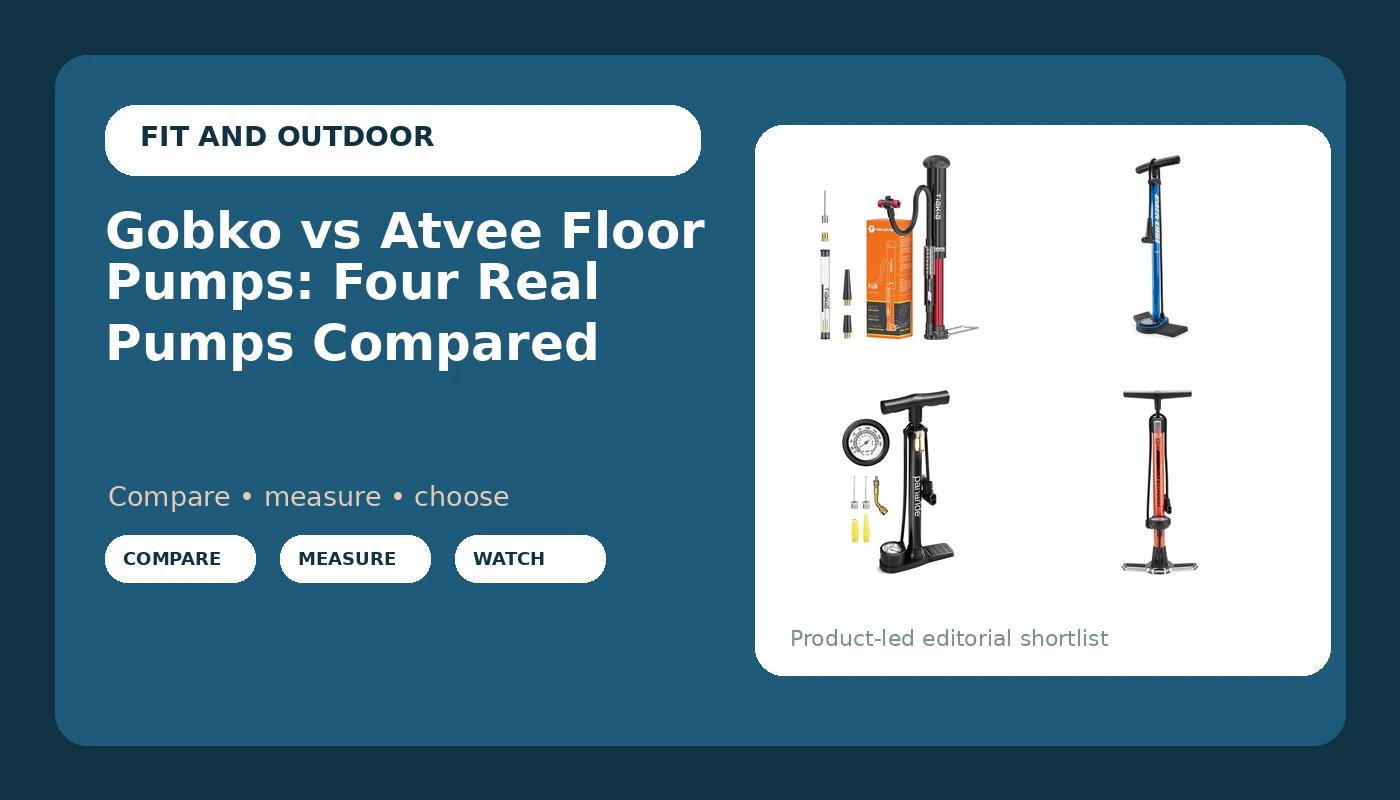
The gobko vs atvee floor pumps question is the kind of search that makes a shop counter useful: two names, no context, and a rider who just wants a tire at pressure before the group rolls. I cannot turn that search into a fair head-to-head without verified listings for both names, so I will not fake one. What I can do is compare the four floor pumps I can verify here, using the same criteria I use behind the rental counter: valve head, gauge, base stability, stroke volume, hose reach, and what the listing quietly leaves out. I have not put these four through a season on my bench, so treat this as a fit-and-listing comparison, not a lab report.
For most riders, the Park Tool PFP-10 is the one I would shortlist first if a known bike-tool brand and home-mechanic intent matter more than listed extras. The budget gauge pump is the value pick for a one-bike household, the compact folding pump is the car-and-stroller pick, and the Schwinn is the mixed-valve family pick only if you confirm which version you are buying.
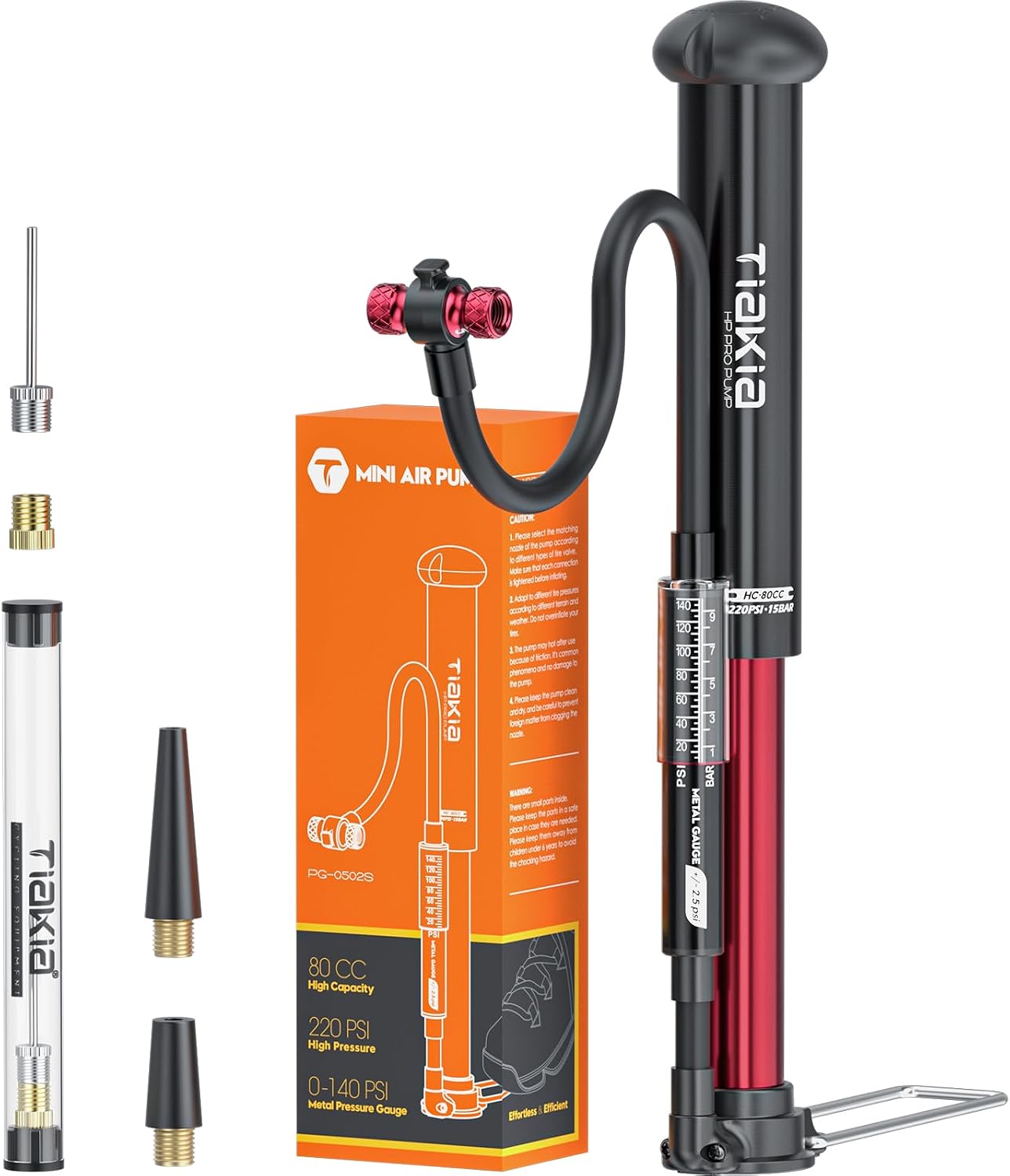
Bike Floor Pump with Gauge
A gauge and road-and-mountain intent make it the simple value shortlist
The listing leaves valve head, hose length, and service details unstated
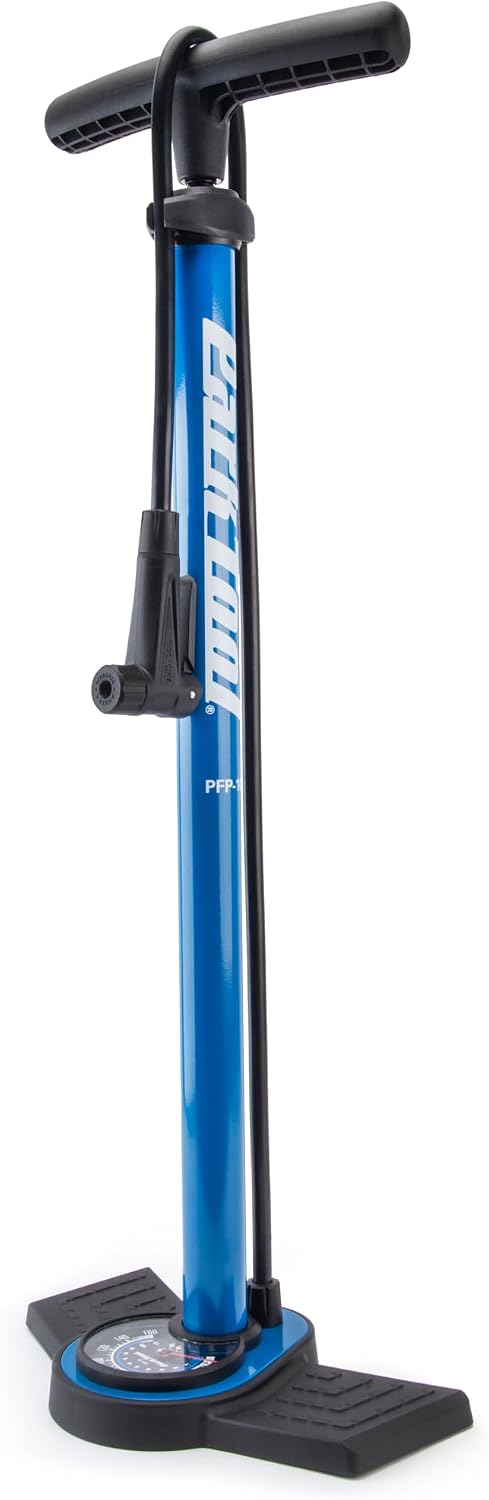
Park Tool PFP-10 Home Mechanic Bicycle Floor Pump
The strongest bike-tool brand signal in the group, aimed at home mechanics
The listing does not lead with a gauge, compact shape, or folding base
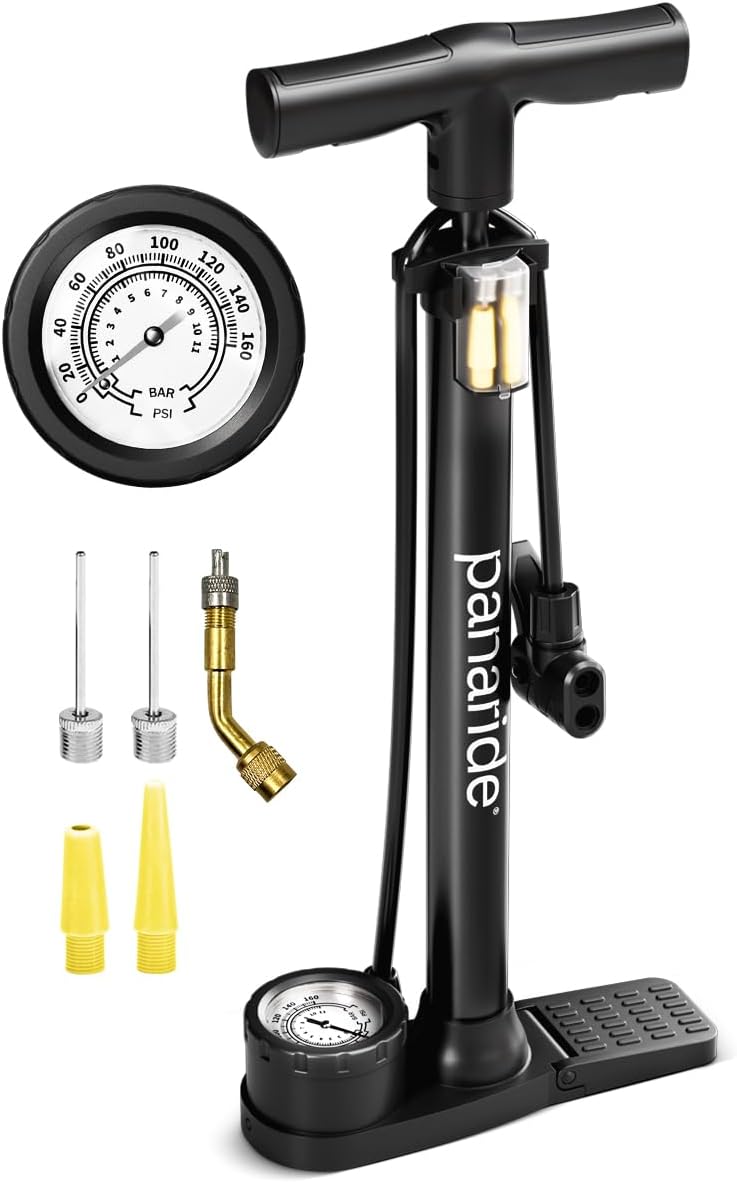
Compact Bike Floor Pump
Folding footrest, compact body, and Presta and Schrader support make it the storage pick
Compact size and a folding base usually mean more strokes and less stability
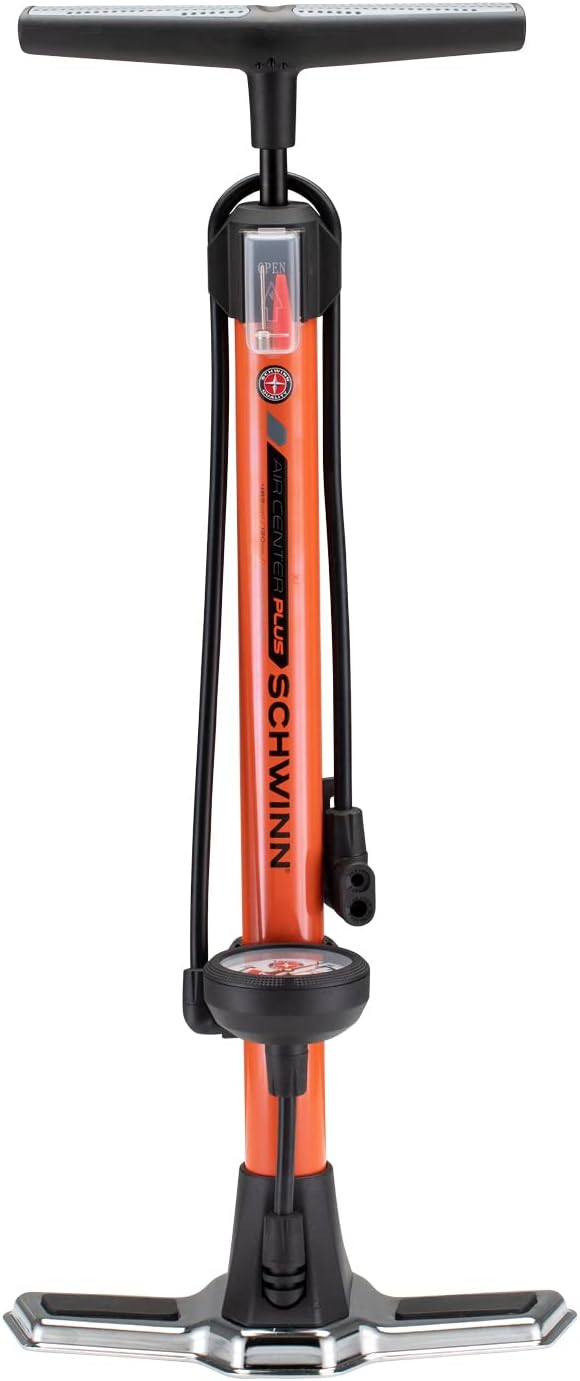
Schwinn Air Center Series or Basic Floor Pump
Dual head, soft grip, and several listed pressure versions suit a family garage
The listing mixes versions, so exact head, gauge, and rating depend on the option
Prices and availability may change.
What separates these four pumps
A floor pump is a simple machine: barrel, piston, hose, valve head, gauge, base. The differences that matter are not exotic. They are whether the head clamps without leaking, whether the gauge is readable at the pressure you use, whether the base stays put while you push, and whether the hose reaches the valve when the bike is in a stand or leaning against a wall. The four pumps here split along those lines, not along marketing categories.
The budget gauge pump and the Park Tool are full-size home pumps. The compact pump is a storage-first design. The Schwinn is a family-bike design with a version problem. That is the whole shape of the comparison. Everything else is detail, and the detail is where a pump becomes annoying. A sticky valve head will make you hate a pump with a perfect pressure ceiling. A base that rocks will make you avoid topping up tires. A gauge that is hard to read in a dim garage is worse than no gauge, because you will stop trusting it.
I care about the boring parts because they are the parts that fail. The barrel rarely fails first. The hose rarely fails first. The connection, the gauge, and the foot base are the usual culprits. So when a listing gives me a pressure number and a color, I do not learn much. When it tells me the valve head type, the hose length, and whether the gauge is serviceable, I learn something.
How to choose floor pumps when the gobko vs atvee floor pumps question stalls you
The gobko vs atvee floor pumps question is really a valve-head question wearing a brand-name coat. Before you compare logos, decide what the pump has to do. For floor pumps for commuting, you need a gauge you can read at the pressure you actually ride, a head that fits your valve without an adapter you will lose, and a base that does not skate on a garage floor. For floor pumps for beginners, the priority is fewer parts: a dual head or a head that switches cleanly between Presta and Schrader, and a hose long enough to reach the rear wheel without lifting the bike.
A floor pumps size guide is less about the height of the pump and more about where it lives. A full-size pump with a broad base is a workshop tool. A compact pump with a folding footrest is a car or stroller tool. The floor pumps fit question starts at the valve and ends at the storage closet. This floor pumps buying guide is not going to pretend that a higher pressure ceiling makes a pump better. Most riders never need the top of the range, and a gauge that is hard to read at low pressure is a bigger problem than a max rating.
There is also the matter of service. A pump with a standard, replaceable valve head and a hose you can swap is a pump you can keep. A pump with a molded head and a proprietary hose is a pump you replace when the rubber hardens. The listings here do not all spell that out, which is why the product sections below separate what is stated from what you should confirm.
For floor pumps for commuting, a simple full-size pump is usually the right answer. You are not packing it. You are using it in a garage or hallway, and you want stability. For a small apartment or a car kit, the compact pump earns its place. The mistake is buying a compact pump for a home workshop and then blaming the pump for being compact.
The value pick: Bike Floor Pump with Gauge
Bike Floor Pump with Gauge is the straightforward value option in this set. The name promises the two things a new rider needs first: a gauge and a pump built for road and mountain bikes. It does not promise a particular valve head, hose length, or service program, and those are exactly the details to check before you click. If you own one bike, one valve type, and you pump once a week, the listed feature set is enough to shortlist it. If you have a household with Presta and Schrader bikes, the missing valve detail matters more.
The win is simplicity. A gauge takes the guesswork out of pressure, and the road-and-mountain label suggests a general-purpose barrel rather than a specialist track pump. The loss is information. The listing tells you the job, not the fittings. That is not a fatal flaw at the value end, but it does mean you should read the product page, not just the title. Confirm the head type, confirm the hose length, and confirm whether the gauge is on the pump body or the hose. Those are the details that decide whether a budget pump is a bargain or a false economy.
I would put this pump on the shortlist for a rider who wants one pump for a hybrid, a hardtail, or a commuter, and who does not want to think about the purchase again. I would not put it on the shortlist for a two-valve household unless the listing clearly shows a dual head. The wrong head will cost you more in adapters and patience than the pump saves.
The known-brand pick: Park Tool PFP-10
Park Tool PFP-10 Home Mechanic Bicycle Floor Pump is the one with the strongest bike-shop name in the group. The model name says home mechanic, not shop duty, and that distinction is worth respecting. Park Tool has a long reputation in bicycle tools, but a reputation is not a gauge reading. The listing here does not lead with a gauge, a folding footrest, or a compact storage shape. What it leads with is the brand and the intended user. If you value a known bike-tool maker and expect to keep the pump for years, this is the shortlist pick. If you need the lowest stroke count or a pump that disappears into a car trunk, the listing does not make that case.
The Park Tool name is also the reason to be careful with assumptions. A home-mechanic pump is built for a home mechanic's use, not for a rental fleet that pumps a hundred tires a week. That does not make it fragile. It makes it a pump for a rider who keeps one or two bikes running and wants the tool to feel familiar. The question is whether the brand premium buys you a better valve head, a better gauge, or better service. The listing as supplied does not answer that, so you should check the product page for the details that matter to you.
My take: this is the pump in the group with the least need for a marketing explanation. You know what Park Tool is. You know why the name appeals. The trade-off is that you are paying for that name and the home-mechanic positioning, not for listed extras. If the brand gives you confidence and the details check out on the product page, it is a sensible buy. If you want the most features per dollar, the value pump and the compact pump are more explicit about what they offer.
The packable pick: Compact Bike Floor Pump
Compact Bike Floor Pump is the only one in this four that advertises a folding footrest and stroller tires. That tells you the design brief: stow it, pack it, and make it fit in small spaces. Presta and Schrader compatibility is listed, which is the right minimum for a family pump. The trade-off is the one every compact floor pump faces: a smaller body and a folding base usually mean more strokes and less stability than a full-size pump. That is not a knock if the pump lives in a car or a hallway closet. It is a knock if you are trying to seat a tubeless mountain tire at home.
The folding footrest is a clever compromise, but it is still a compromise. A hinge is another part to clean and another part to wear. On a stroller tire or a kids' bike, that is fine. You are not asking the pump to do workshop duty. On a road bike with high-pressure tires, the smaller barrel will make you work harder, and the lighter base will ask more of your foot. The compact pump is the right tool for a specific job, not a universal replacement for a full-size pump.
For a commuter who locks up at an office and wants a pump in a desk drawer or a pannier, the compact shape makes more sense. The key is to buy it for storage, not for speed. If you accept the extra strokes, it does exactly what the name says.
The family pick: Schwinn Air Center Series
Schwinn Air Center Series or Basic Floor Pump is the mixed-valve household pick on paper. The listing names a dual head for Schrader and Presta, a soft grip handle, and a range of bikes with 100, 120, or 160 PSI versions. Those are useful features. The catch is the word "or" in the name. You are not choosing one pump with three pressure ceilings; you are choosing among versions, and the exact head, gauge, and pressure rating can vary with the option. Before buying, confirm which version is in the cart. If the listing shows a dual head and a gauge on the version you select, it is a sensible family pump. If it shows a basic head and no gauge, the same name is doing a lot of work.
The dual head is the real selling point for a household with a road bike, a hybrid, and a kids' bike. It saves you from hunting for an adapter or swapping a head. The soft grip handle is a comfort detail, not a performance claim, but it matters if you pump several tires in a row. The multiple PSI versions are where the listing gets muddy. A higher ceiling is not automatically better. What matters is whether the gauge is readable at the pressure your tires use, and whether the head seals on both valve types.
I would treat this as a family pump with a verification step. Find the exact option, read the bullets for that option, and make sure the dual head and gauge are included. If they are, the Schwinn is a practical choice for a garage with mixed valves. If they are not, the name is broader than the product, and you should keep looking.
What floor pumps reviews miss about the valve head
Most floor pumps reviews spend their word count on max PSI and barrel material. The top rated floor pumps in a search result are not necessarily the ones that survive a rental fleet. At the counter, the failure I saw most was not a snapped barrel. It was a valve head that leaked, a gauge that fogged, or a base that walked across the floor. Those are boring failures, and they are the ones that make a pump annoying by year two.
A floor pump lives or dies at the connection. A dual head is convenient, but only if it seals on both valve types without needing a third hand. A smart head is nice, but only if the internals are serviceable. A gauge is useful, but only if the needle is steady at the pressure you actually use. Those are the questions I would ask before I trusted any label. They are also why a cheap pump with a good head can beat an expensive pump with a fussy one.
The other thing reviews miss is the floor. A pump with a narrow base and hard feet will slide on smooth concrete. A pump with a wide base and rubber feet will stay put. That sounds trivial until you are trying to hold a valve steady with one hand and pump with the other. The base is not a spec sheet hero, but it is a daily-use feature. The same goes for the hose. A short hose forces you to lift the bike or kneel at an awkward angle. A longer hose lets you stand upright and keep the valve straight. Neither detail shows up in a pressure rating.
Trade-offs and the counter verdict
The value gauge pump gives up listed detail. You get the job description and a gauge, but not a lot of information about the valve head or hose. That is a fair trade for a simple one-bike household, and a poor trade for a two-valve household.
The Park Tool gives up listed extras. You are buying the brand's home-mechanic positioning, not a folding footrest or a compact shape. If the brand's support matters to you, that is value. If you need a pump to live in a backpack, it is not.
The compact pump gives up stroke volume and stability for storage. That is the right trade for a stroller tire or a car kit, and the wrong trade for a home workshop.
The Schwinn gives up certainty. The name covers several versions, so the feature set depends on the exact option. A dual head and soft grip are real conveniences, but only on the version that has them. Check the option, not the headline.
If I were stocking a rental counter again, I would keep a full-size pump with a gauge and a rebuildable head as the bench pump, and a compact pump as the go-anywhere backup. For this group, the Park Tool PFP-10 is the one I would shortlist first for a home mechanic who wants a known bike-tool brand. The budget gauge pump is the sensible value pick for a single-bike rider. The compact folding pump is the right choice for a car, a stroller, or a small apartment. The Schwinn is the family pick only if you confirm the version has the dual head you want.
The gobko vs atvee floor pumps question will keep showing up in search because brand names are easier to type than specifications. The better question is boring: what valve is on your bike, what pressure do you run, and where will the pump live? Answer those three, and the logo matters a lot less.