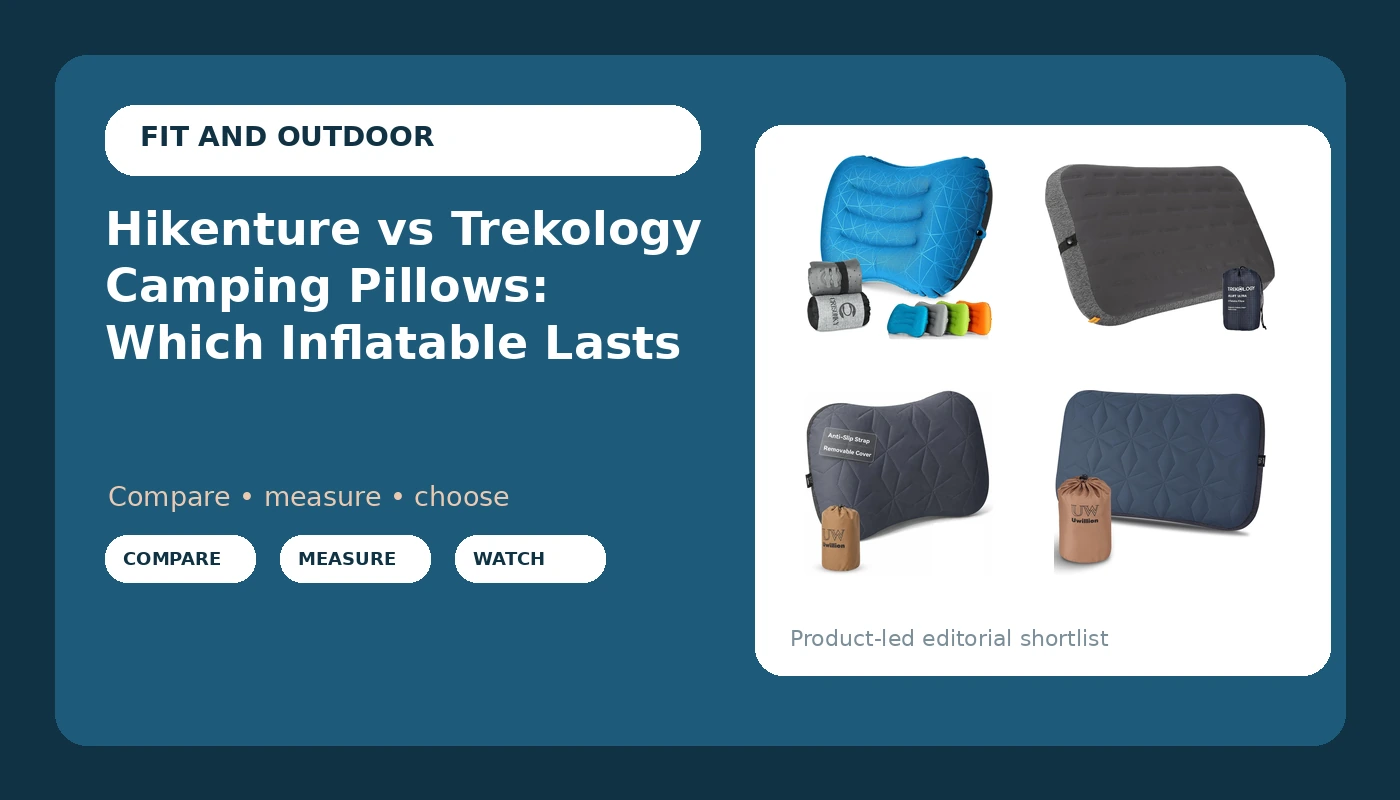
Ten years behind the rental and repair counter of an outdoor shop on the Cascade lakes taught me where cheap sleep gear goes wrong, and it is almost never the pad. The pad gets the budget, the research and the warranty claim. The pillow gets grabbed at the register on the way out, and then everybody wonders why they wake at 5 a.m. with a crick in their neck. The search that lands most people on this page, hikenture vs trekology camping pillows, is really a question about how much engineering fits in a sack the size of your fist, and whether the extra money buys anything you can feel at 2 a.m.
A word on names before we start. Only one of these four pillows is sold under a brand name you can look up. The TREKOLOGY Aluft Ultra says what it is in the title. The other three use long descriptive titles, and that includes the ultralight that anchors the Hikenture side of this comparison: the listing I can verify does not put a brand in its title, so I am judging it on the specifications it prints rather than on a logo. That is not a knock. It is how most of this category is sold, with the same handful of factories turning out pillows that take a different label and a different hero photo depending on the seller.
The TREKOLOGY Aluft Ultra is the pick for most campers, because 24 x 15 inches is the footprint where an inflatable stops feeling like a balloon under your ear. The caveat is that it has no removable cover, and the two listings that do are the ones I would expect to still be in service in season three. If you sleep hot, camp more than a dozen nights a year, or have ever eaten dinner sitting on your own pillow, the cover matters more than the badge.
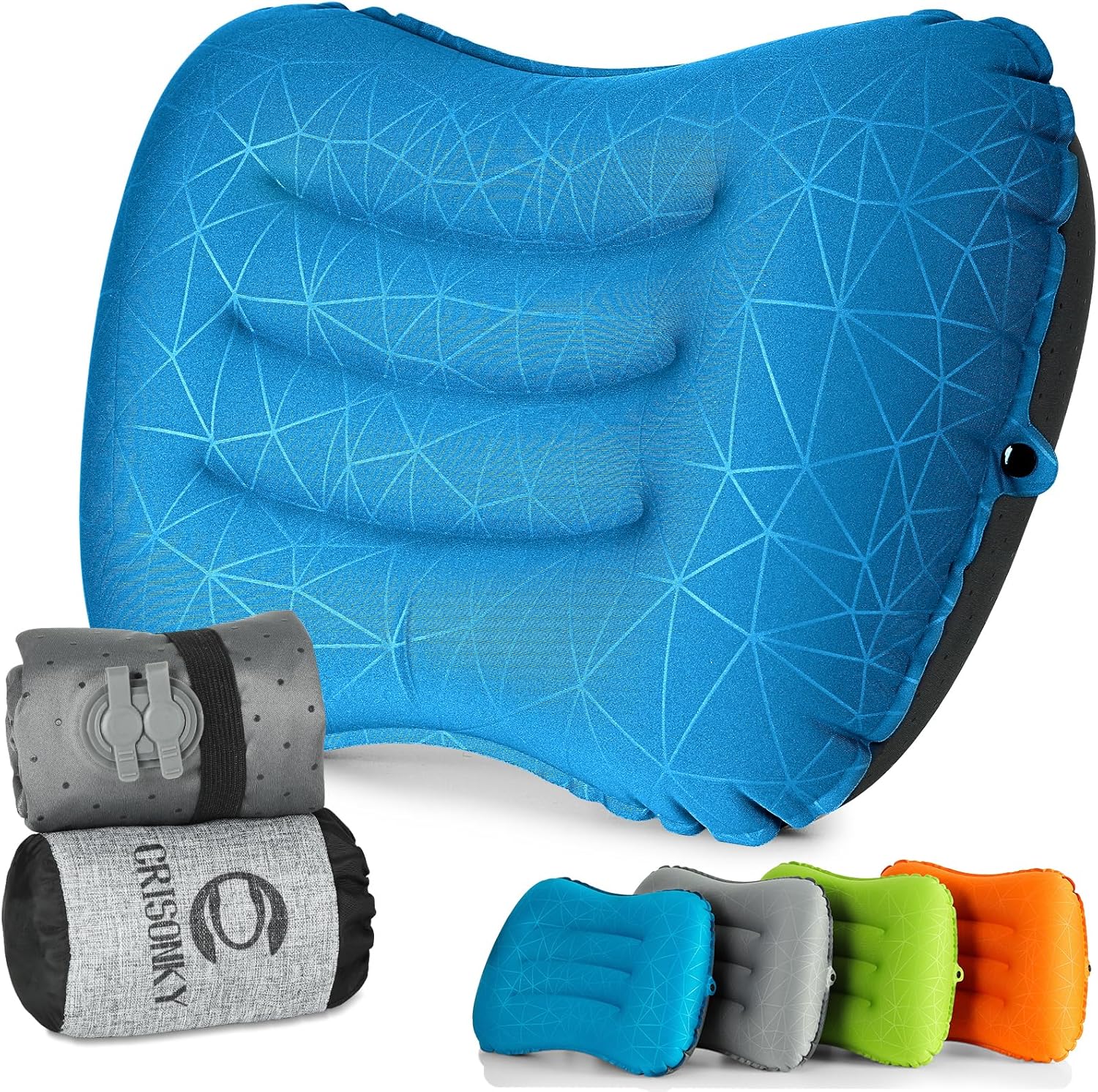
Camping Pillow, Ultralight Inflatable Travel Pillow for Backpacking
The specialist of the group: a small packed volume that disappears into a lid pocket, made for trips where the pack is stripped down
No stated footprint and no washable cover, so every night of sweat goes straight into the shell
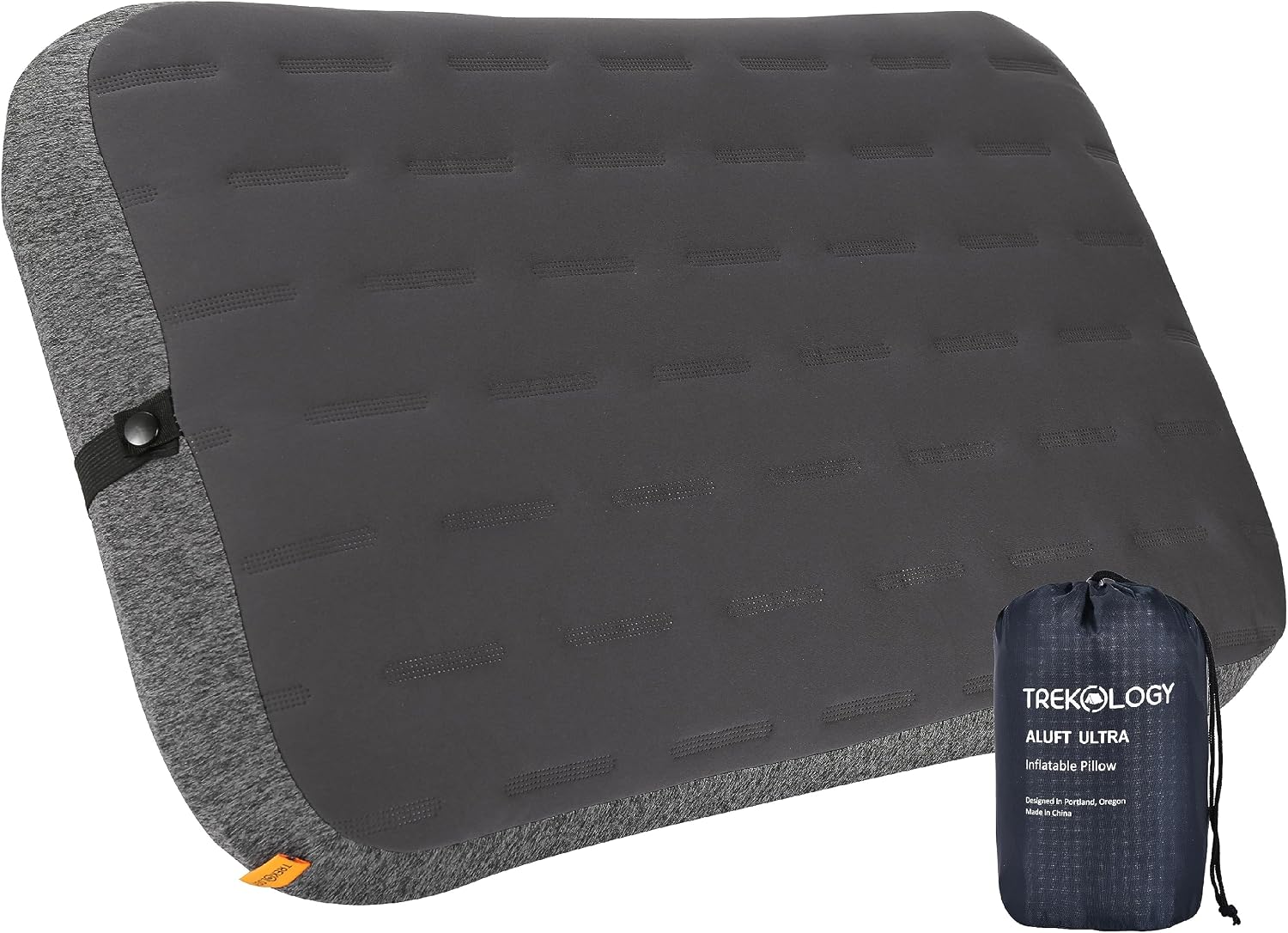
TREKOLOGY Aluft Ultra Inflatable Camping Travel Pillow, Large 24x15in, Gray
Publishes its footprint, keeps a named model with a brand behind it, and 15 inches of width is enough for a side sleeper to roll over
No removable cover, so cleaning means hand washing the whole shell around the valve
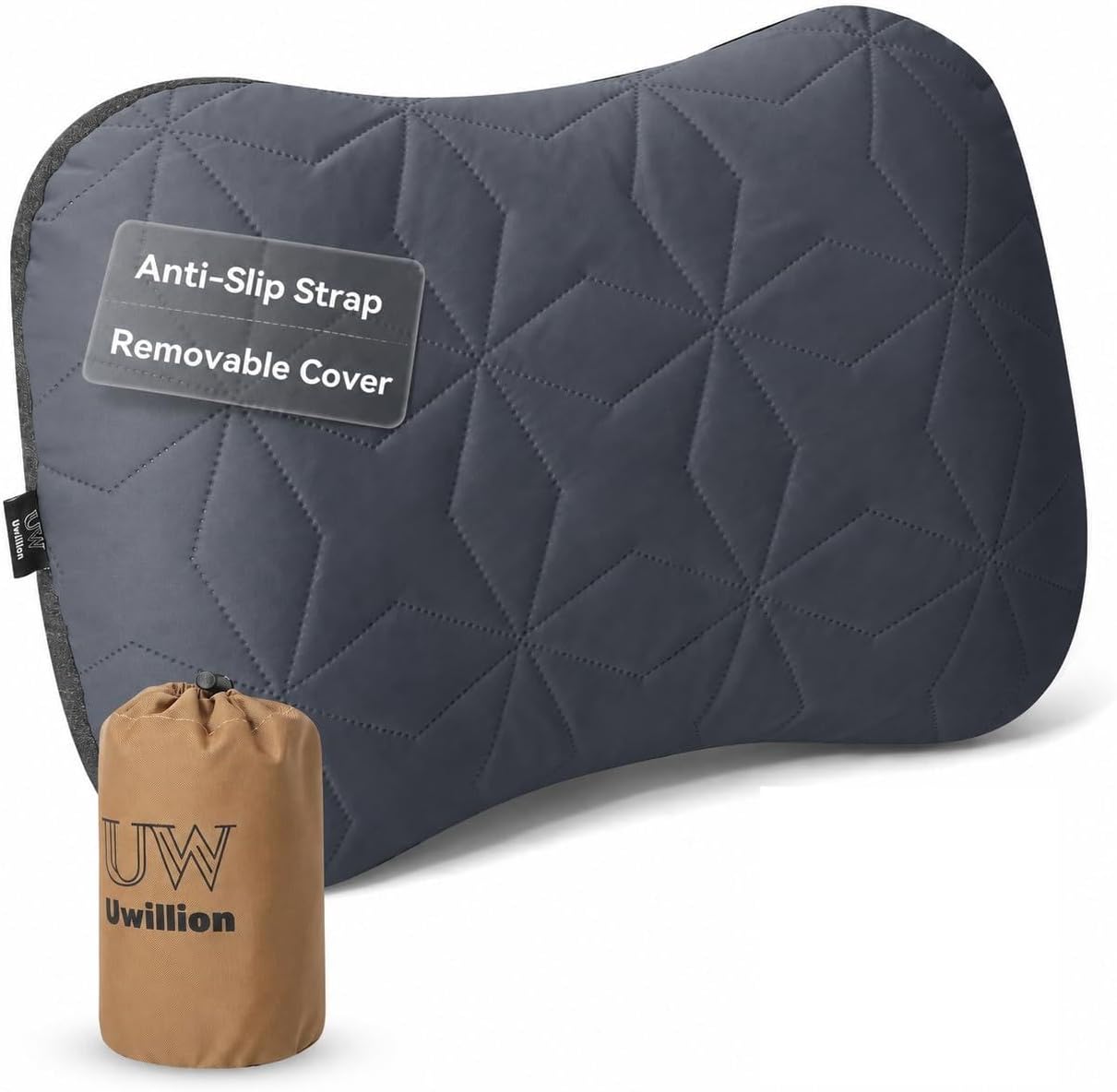
Inflatable Camping Pillow with Removable Washable Cover, Ultralight Compact Air Pillow, Grey
The only one here marketed for lumbar support as well as sleep, with a cover you can strip and wash after a sweaty night
No footprint printed in the title, so you are guessing on size until you read the full product page
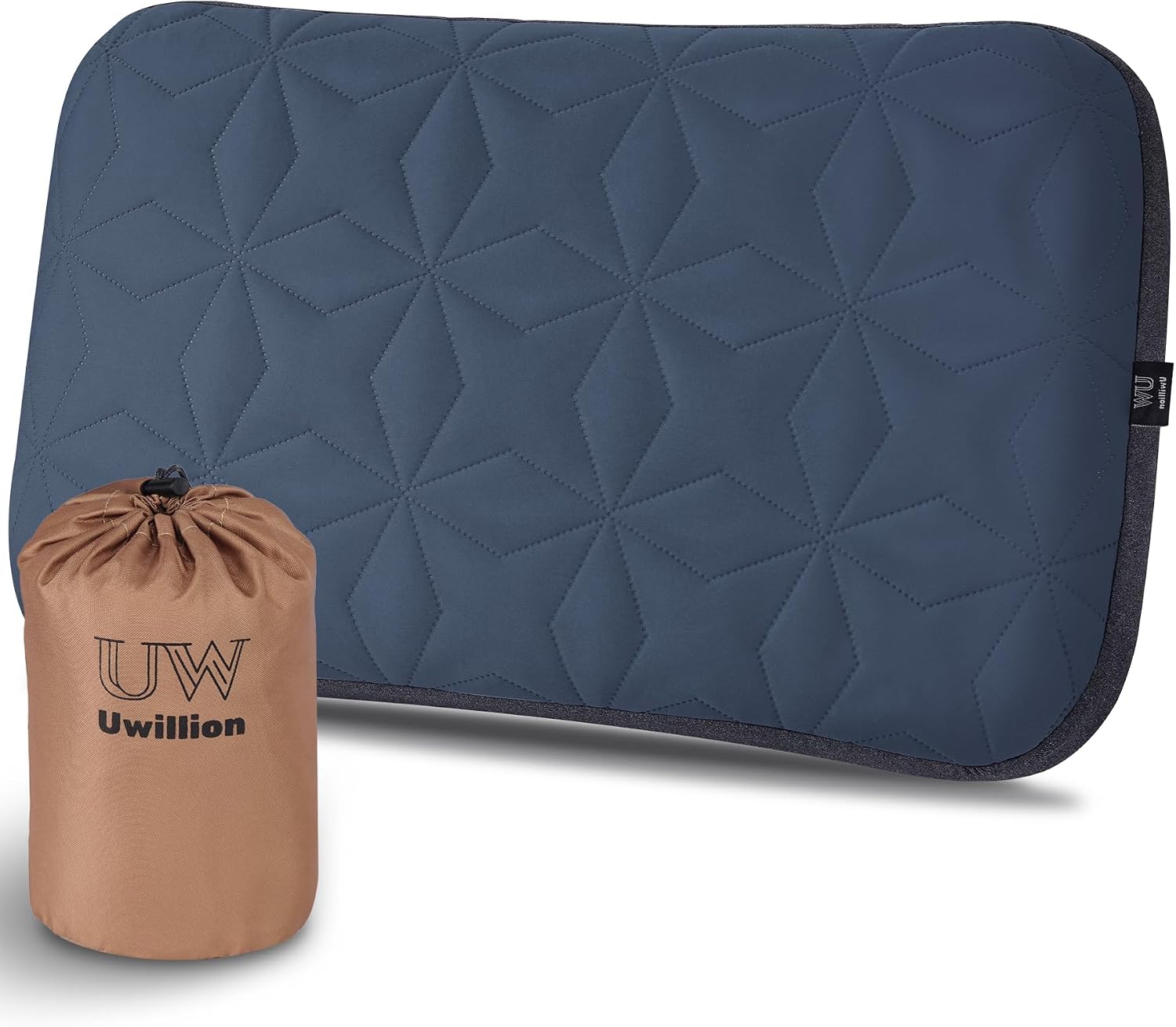
Camping Pillow with Removable Cover Large Size 24" x 15", Gray
Takes the 24 x 15 inch footprint of the Trekology and adds a removable washable cover on top, the combination nobody else here offers
No brand name in the listing, so there is no reputation to lean on for warranty or parts
Prices and availability may change.
What the listing tells you and what it hides
Four listings, and only two of them print a footprint in the title. That asymmetry is the whole game with inflatables. A pillow is a sealed bag of air, and the numbers that decide whether you sleep are the ones sellers rarely headline: inflated thickness at the centre versus the edge, packed volume, fabric weight in denier, and valve type. You can usually find those on the product page, and you should look, because a pillow that measures 24 inches across but collapses to an inch and a half under the weight of a head is a 24 inch pillow that does nothing.
The other thing a title hides is the seam. Every inflatable in this category is welded rather than stitched at the perimeter. A good weld is a smooth, consistent bead with no visible pinch points. A poor one has a bubble or a wrinkle where the two sheets met unevenly, and that wrinkle is where the leak starts, usually on the second trip, usually at three in the morning. None of these four show the perimeter seam in the hero image. That is not a black mark against any of them. It just means the photos are marketing, not documentation.
hikenture vs trekology camping pillows: two different jobs
The keyword frames this as a straight fight, but the two ends of this group are not competing for the same slot in the pack.
The ultralight inflatable at the light end is a pillow for people counting grams. It is the one you stuff into a lid pocket and forget about, and for a fast overnight where the pack is under 30 litres, that is exactly the right call. What you give up is support volume and a washable surface. There is no cover, no stated footprint in the title, and the shell takes everything your head and neck put out across a weekend.
The TREKOLOGY Aluft Ultra plays a different game. It publishes 24 x 15 inches, which is the size where an inflatable actually cradles a head instead of letting it roll off the side. Fifteen inches of width is enough for a side sleeper to turn over without surfacing. That is the entire argument for the bigger pillow, and it is a good one: a sore neck costs more trail miles than a hundred grams ever will.
So the honest answer to hikenture vs trekology camping pillows is that they are two answers to two questions. Counting ounces on a three-day push, take the small one. Wanting to sleep like a person, take the big one.
Camping pillows weight: the number that decides whether it comes
Camping pillows weight is the spec that gets argued about in forums and almost never printed in a title, which is backwards. A pillow is one of the few pieces of sleep kit where you can shave grams without risking a cold night.
The math most people get wrong is the ratio. On a summer overnight with a 12 litre pack, a hundred gram difference between two pillows is a rounding error and completely irrelevant. On a fast alpine push with a six kilo pack, the same hundred grams is nearly two percent of everything on your back, and it starts to matter. That is why the ultralight here makes sense for the second trip and not the first. Packed volume matters even more. Look for a stuff sack dimension in the listing, or a photo of the pillow next to something with a known size, which is the only scale reference that holds up across brands. A large pillow that packs to the size of a grapefruit is fine in a 50 litre pack and a nuisance in a running vest.
A camping pillows size guide that starts with your sleeping position
The camping pillows size guide you actually need has three lines in it.
Back sleepers can get away with something smaller and thinner. You need enough height to fill the gap between the back of your skull and the pad, and not much else. A compact pillow with a gentle taper does the job, and the ergonomic shaping on the compact inflatable here is aimed at exactly that.
Side sleepers need width and thickness, in that order. Your shoulder creates a gap between head and mat that a thin pillow will not fill, and if the pillow is narrow your head rolls off the edge the moment you shift. This is why the two 24 x 15 inch pillows in this group matter, and why the footprint is the first number I would check on any listing.
Stomach sleepers need the least height and the most forgiveness. Almost anything works, which is why so many people report that a cheap inflatable was fine and then discover it was not fine the first time they tried to sleep on their side.
Match the pillow to your sleeping position first and to your pack size second. Most people do it the other way around, buy the smallest thing they can find, and spend the trip folding a jacket under their head.
The removable cover is the spec nobody photographs
Two of these four ship with a removable, washable cover, and it is the most useful feature in the category that never makes the headline.
An inflatable pillow sits against your face for eight hours a night, which means it collects sweat, skin oils, sunscreen and, on a bad trip, a bit of whatever you spilled on the tent floor. A bare shell cannot go in a machine, and hand washing an inflatable means soaking the valve and the welds. Do that often enough and you will find the weak point in the valve.
A cover solves all of it. Strip it, wash it, hang it off the back of a pack, put it back on. The pillow itself never gets wet. More importantly, the cover takes the abrasion that would otherwise go into the shell, and abrasion is what thins a welded seam over a season. The trade off is a small weight penalty and one more piece to lose. I have watched a cover blow off a picnic table into a lake, so if you go that route, take it off inside the tent.
Valves, welds and baffles: what breaks first
Three parts fail on an inflatable pillow, and only one of them is fixable in the field.
The valve is the usual suspect. A push-in plug with a flapper inside is light and cheap, and the flapper eventually folds the wrong way or the plug stops seating. A two-stage valve with a one-way intake and a separate dump port is more plastic and more grams, and it is far more reliable across a season. You can spot the type in the listing photos if the seller bothered to photograph the valve, which is a signal in itself: brands that show you the valve and the underside have usually thought about the valve and the underside.
The perimeter weld is second, and it is the one that ends a pillow's life, because a leak at the seam is not something you patch on a cold morning. It goes at the corner, where the two sheets have to be shaped most aggressively.
Baffles come third. Most inflatables use internal I-beam baffles to stop the pillow turning into a sphere. When one separates you get a bulge at one end and a flat spot under your head, and the pillow is done.
My prediction for this group, based only on what the listings show and on how the category is built: the two pillows with covers hold up better in year two, because the cover absorbs the abrasion that thins the shell. The bare ultralight is the one I would expect to be replaced first, not because it is badly made, but because it takes the most direct contact with a human head and has no protection at all.
Reading camping pillows reviews without getting fooled
Most camping pillows reviews are written after one night, and one night is the least informative data point you can have about an inflatable.
The useful ones mention how many nights the pillow lasted, whether the valve stiffened or loosened, and whether the owner still uses it a season later. Search the review text for the word leak and read the dates. A cluster of leak complaints inside three months on any listing is a design problem, not a batch problem.
Two patterns show up in every review section for this category. The first is the car camper who loves the pillow because it lives in a tote and never gets compressed. The second is the backpacker who loved it for two trips and then found it soft at 2 a.m. Both are true, and they do not contradict each other.
The list of top rated camping pillows on any marketplace is sorted by review count and average, which means a pillow with twelve thousand reviews and a slow leak that takes a month to appear will still sit near four and a half stars. Read the three-star reviews. That is where people describe the actual failure.
A camping pillows buying guide for beginners
Treat any camping pillows buying guide as a list of questions to ask about the specific listing in front of you, because the answers change with the seller.
Ask what the inflated footprint is in inches, written down. Ask what the packed size is next to a recognizable object. Ask whether the cover comes off. Ask whether the valve is a single plug or a two-stage port. If a listing cannot answer all four, that is your answer.
The question of how to choose camping pillows gets easier once you accept that no single pillow covers every trip. People who camp regularly tend to end up with two: a small one for backpacking and a big one for car camping. If you are shopping for camping pillows for beginners, the big one is the better first buy, because it is the one that convinces you a pillow is worth carrying at all. For camping pillows for backpacking, the calculus flips, and a small inflatable that lives in the lid beats a large one you resent carrying.
Which of the four to buy
Here is how I would sort them, without quoting a price, because this category moves constantly and the number you see will not be the number next month.
TREKOLOGY Aluft Ultra. For the camper who wants to sleep on their side and does not want to think about it again. 24 x 15 inches, a named model, and a footprint that matches what the listing claims. Visit on Amazon
The large pillow with the removable cover. The better long-term buy for anyone camping more than a dozen nights a year, because the cover takes the wear and the shell never needs soaking. Same footprint as the Trekology, plus the washable surface. Visit on Amazon
The compact pillow with the removable cover. The one for a small pack where you still want a real surface against your face, and the only one here sold with lumbar use in mind. It does not print a footprint in the title, so check the product page before you commit. Visit on Amazon
The ultralight inflatable. The specialist. Smallest packed volume of the group, no cover, and the one I would buy for a single fast trip rather than a full season. Visit on Amazon
And that is the whole answer to hikenture vs trekology camping pillows: the name in your search bar is not the decision. The footprint, the valve and the cover are.
Bottom line
Buy the Trekology if you want to sleep on your side with no fuss. Buy the large removable-cover pillow if you want that footprint to survive three seasons of sweat and gravel. Buy the compact one if your pack is small and you still want a clean surface against your face. Buy the ultralight if the trip is short and the grams are real. Everything past that is marketing copy, and marketing copy does not keep your head off a sleeping pad at two in the morning.