
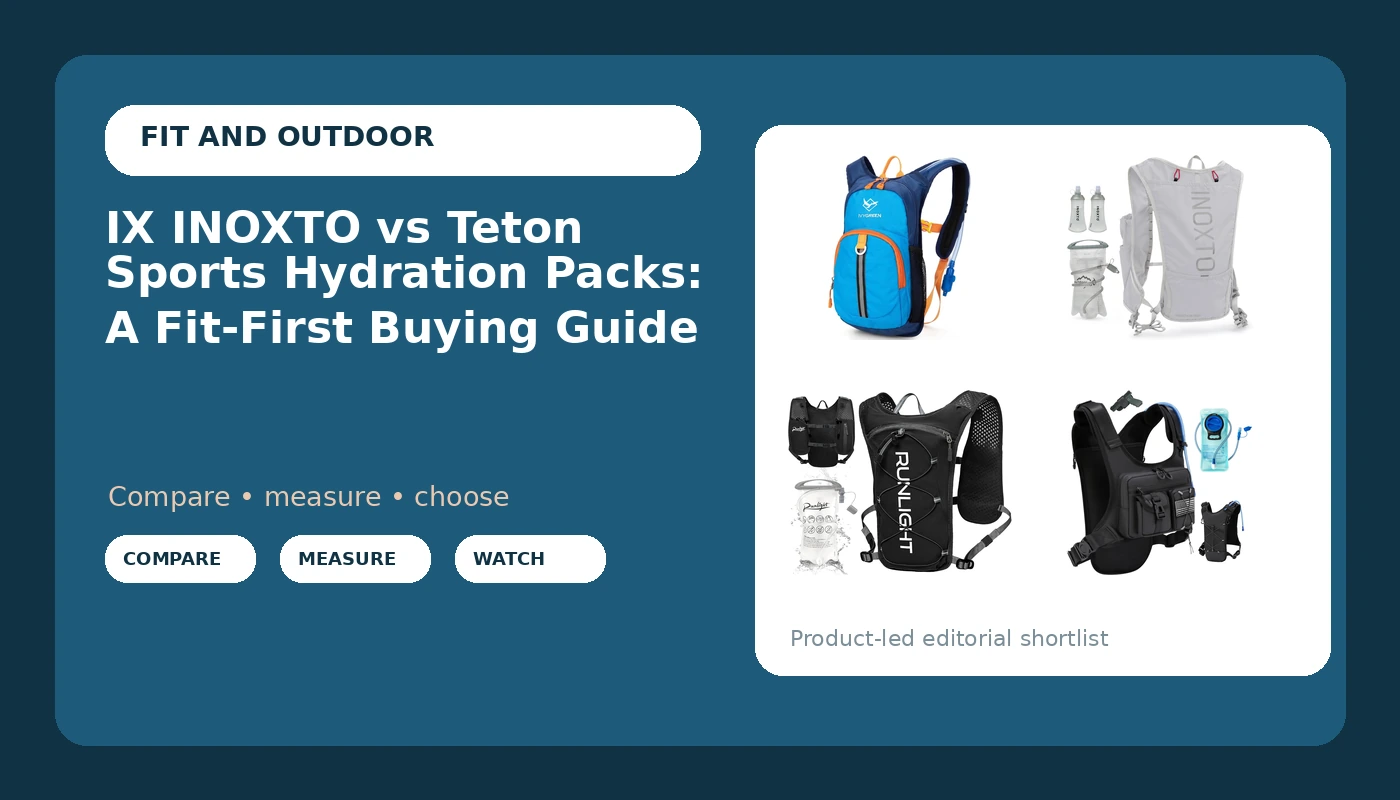
I have spent enough time behind a rental counter to know that most pack problems are fit problems wearing a spec sheet. The search phrase ix inoxto vs teton sports hydration packs usually arrives from someone trying to choose between two names, but the useful question is not the badge on the bladder. It is whether the harness fits your torso, whether the bladder volume matches the length of your day, and whether the parts that touch your body will still work after a season of sweat and grit.
At the shop, I learned to judge packs by what the listing leaves out. A bladder volume is easy to print. A torso range, a buckle maker, a hose route, and a warranty are harder, and those are the details that decide whether a pack becomes invisible on the trail or ends up in the return bin. I have not put these four through a full season, and I will not pretend otherwise. What I can do is read the build brief the way I read a repair ticket: find the part that will fail first, then decide whether the rest of the package is worth the compromise. That is the standard I apply to hydration packs reviews, and it is the standard I will apply here.
For most adults in this batch, I would start with the Criuage Running Hydration Vest Backpack because its 2.0L bladder gives more margin on long hot days, and its chest-pack layout is the one I would want to fit before a race. For a child, the Ivygreen is the only kids-specific option here. The INOXTO is the insulated pick to investigate. The generic Running Vest is the one I would handle with the most caution, because its listing gives the least to go on.
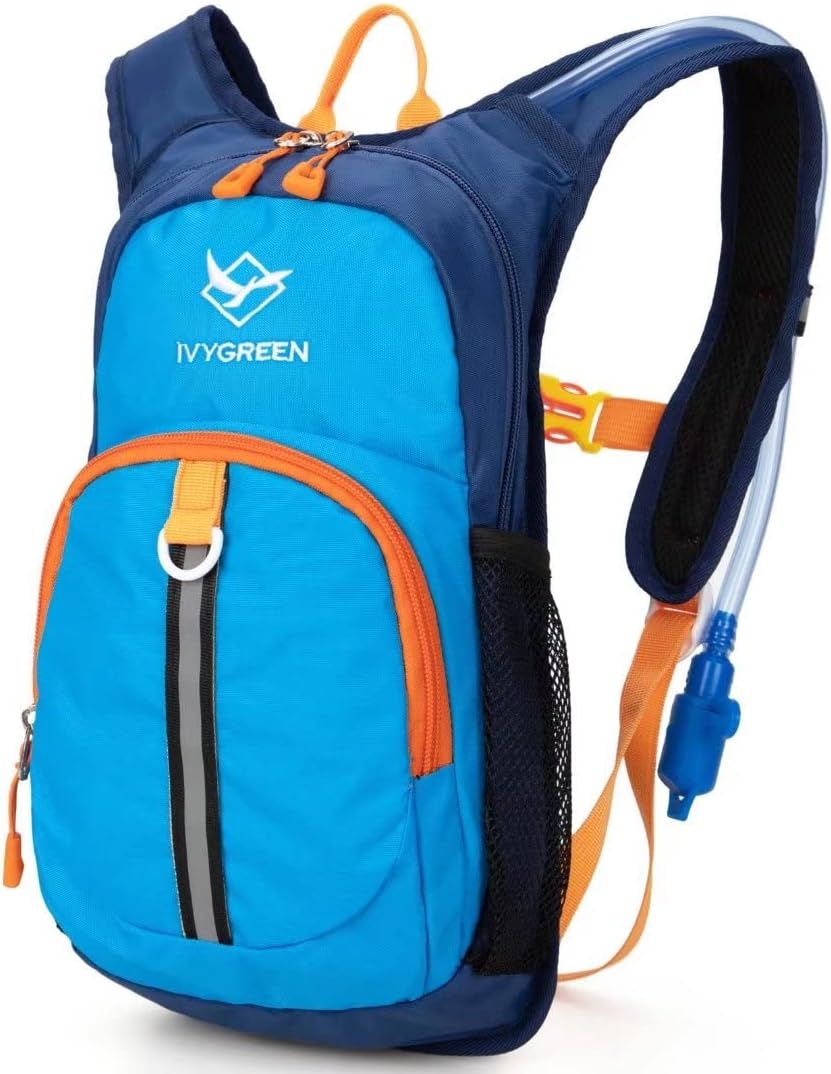
Ivygreen Kids Hydration Backpack for Hiking, 1.5L Water Bladder
The only kids-specific pack in the group, with a 1.5L bladder sized for a child's day
No adult torso range or harness detail in the supplied record
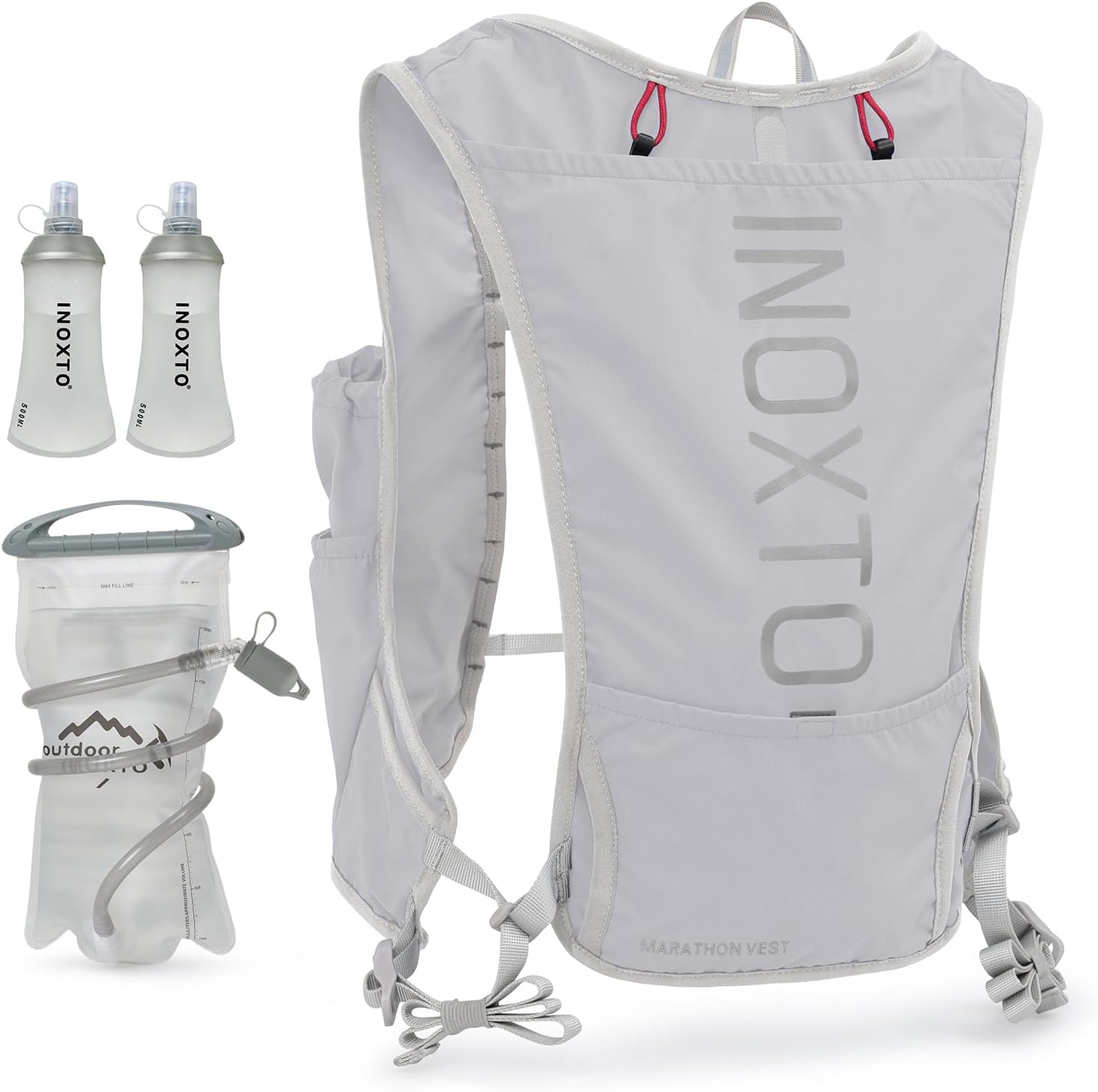
INOXTO Running Hydration Vest Backpack,Lightweight Insulated Pack with 1.5L Water Bladder Bag Daypack for Hiking Trail Running Cycling Race Marathon for Women Men
The only pack here that calls itself insulated, with a 1.5L bladder and a running vest layout
The insulation claim does not say whether the hose or the full bladder is covered
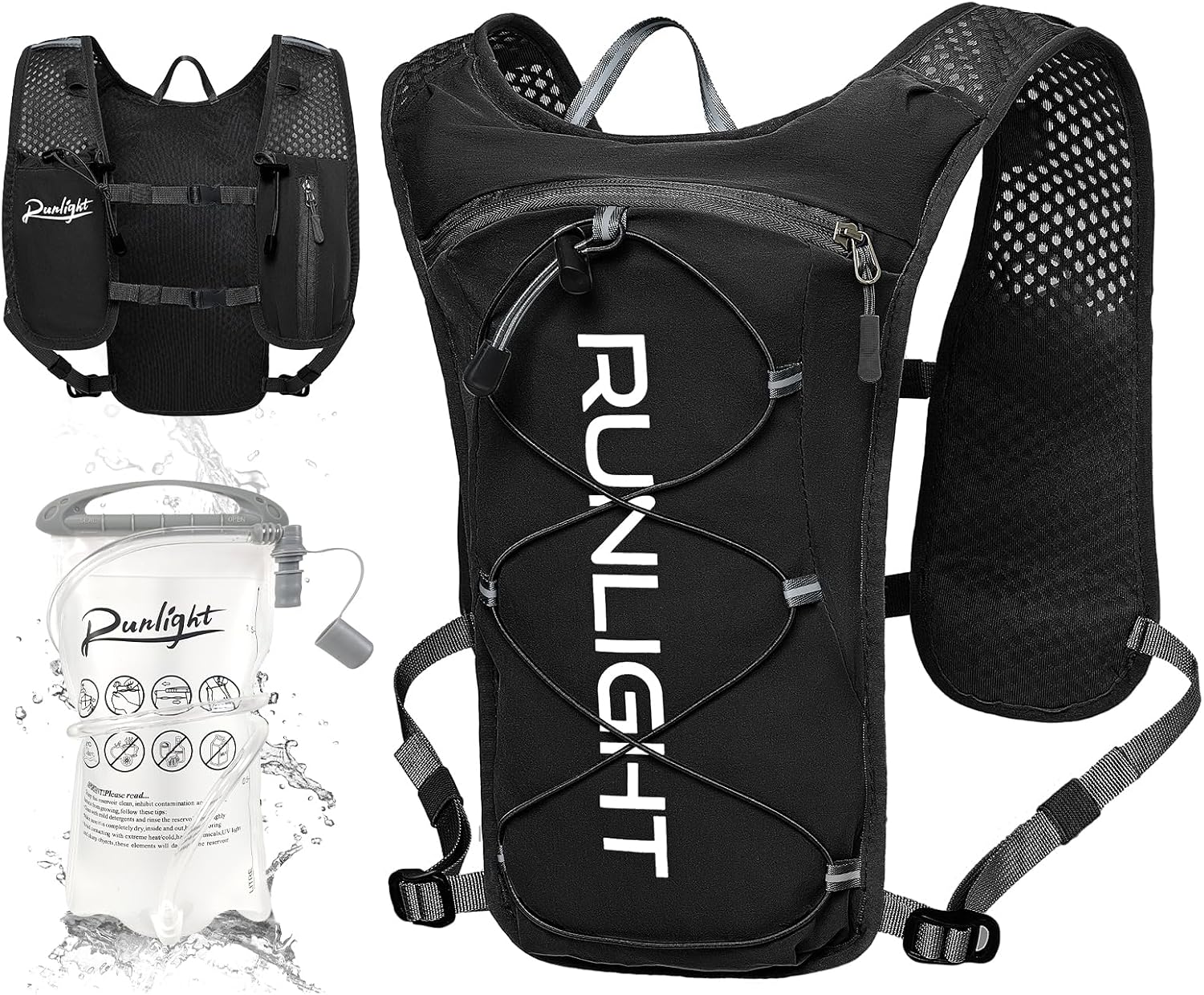
Running Vest for Women Men Lightweight Hydration Backpack Pack with 1.5L Water Bladder Bag Hydro Daypack for Hiking,Trail,Skiing,Camping,Cycling,Race,Marathon
A broad 1.5L vest brief for hiking, trail, skiing, camping, cycling, and racing
Generic name and thin fit detail make it hard to verify before purchase
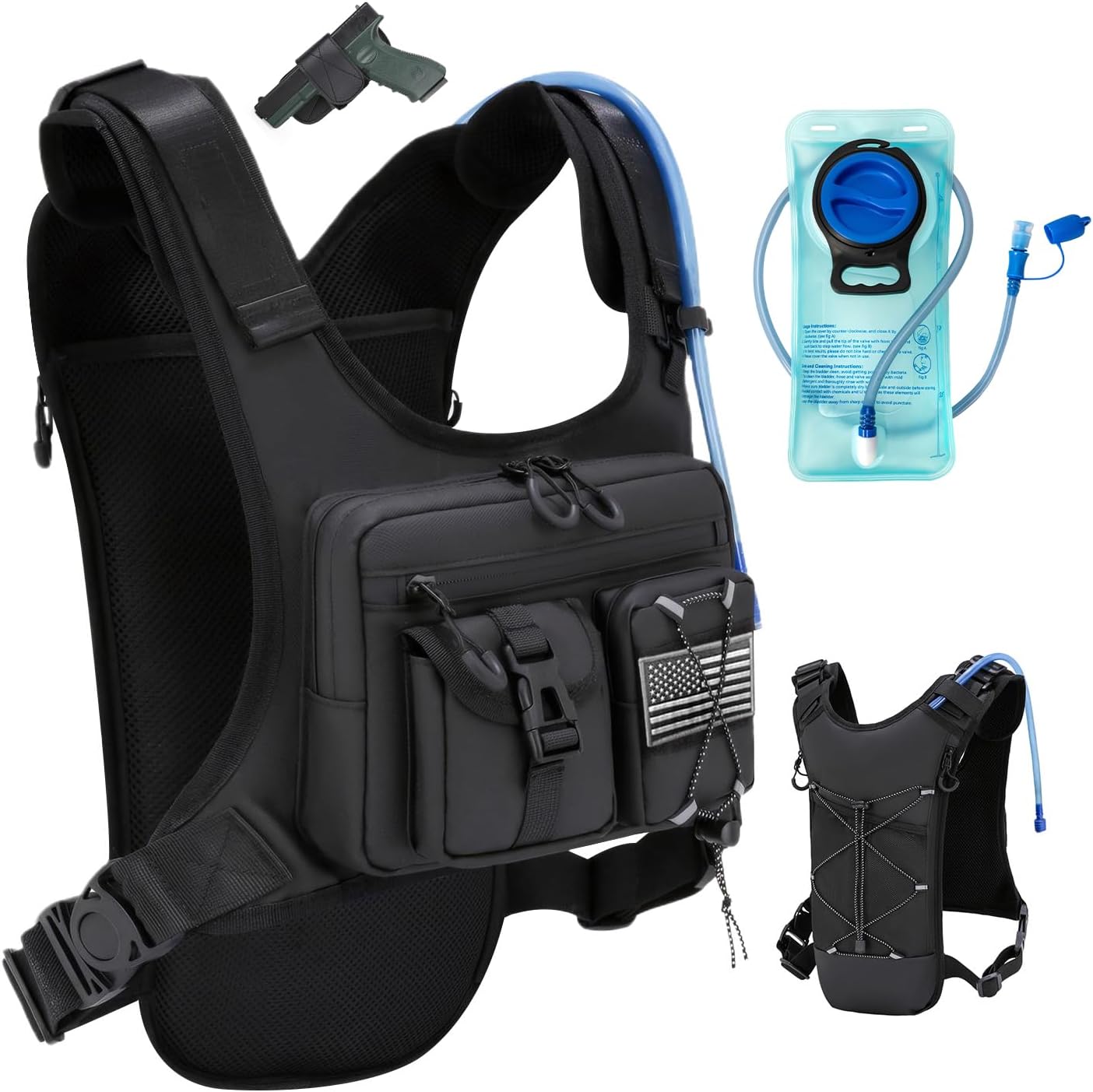
Criuage USA Patent Running Hydration Vest Backpack, Lightweight Chest Pack with 2.0L Water Bladder Bag Daypack for Hiking Running Cycling Race Marathon for Women Men
The largest bladder in the set at 2.0L, plus a chest-pack layout for loaded stability
The patent claim is not a fit spec, and the chest harness needs torso measurements
Prices and availability may change.
ix inoxto vs teton sports hydration packs: the fit question
The ix inoxto vs teton sports hydration packs question assumes a head-to-head. In this verified batch, there is no Teton Sports pack to link, and I am not going to invent one to make the headline neater. That leaves the INOXTO as the name on one side and three other packs as the real alternatives. The comparison still works because the decision is the same one you would make in a shop: put the pack on, load the bladder, and see whether the weight sits on your hips or pulls at your shoulders.
A hydration vest is a harness with a bag attached. If the harness is wrong, bladder capacity and insulation do not save it. For hydration packs for hiking, I want the bladder low and tight enough that it does not swing on a descent. For racing, I want less bounce and a bite valve I can reach without breaking stride. The supplied records for these four do not give me a torso range or a harness measurement, so I cannot tell you which one fits you. I can tell you that fit is the first question, not the last.
What each pack is for
These are not four versions of the same pack. The names tell you the intended job, and the job should drive the choice more than the bladder volume.
Ivygreen Kids Hydration Backpack for Hiking, 1.5L Water Bladder
The Ivygreen is the only kids-specific pack in the group. That matters because a child's torso is not a small adult torso with the same strap geometry. A 1.5L bladder is sensible for a short hike or a kid's day out. What the record does not tell me is the torso range, the buckle type, or whether the shoulder straps are sized for a child or just shortened adult straps. If you are buying for a growing kid, check the return policy and measure the child's torso before you fill the bladder.
INOXTO Running Hydration Vest Backpack,Lightweight Insulated Pack with 1.5L Water Bladder Bag Daypack for Hiking Trail Running Cycling Race Marathon for Women Men
The INOXTO is the only one that calls itself insulated. That could matter if you run in heat or carry the pack between refills. It does not tell you how thick the insulation is, whether the hose is covered, or how much of the bladder is actually protected. Insulation is a system, not a word. If cold water on a long run is the priority, ask those questions before you buy. If you just need a 1.5L vest for trail runs, the insulation claim is a bonus, not the reason to choose it.
Running Vest for Women Men Lightweight Hydration Backpack Pack with 1.5L Water Bladder Bag Hydro Daypack for Hiking,Trail,Skiing,Camping,Cycling,Race,Marathon
The generic Running Vest has the broadest brief in the group and the least specific one. The name lists almost every use case, which is a warning sign, not a feature. A pack that claims skiing and marathon racing is probably a generalist. Generalists can be fine for hydration packs for beginners, but only if the harness fits. The supplied record gives no brand beyond the generic title and no harness measurements. I would treat this as a pack to inspect in person or buy from a seller with easy returns.
Criuage USA Patent Running Hydration Vest Backpack, Lightweight Chest Pack with 2.0L Water Bladder Bag Daypack for Hiking Running Cycling Race Marathon for Women Men
The Criuage has the largest bladder in the set at 2.0L and a chest-pack layout. That extra half liter is real margin on a hot day or a long unsupported loop. The chest-pack format also changes where the weight sits, so fit matters more, not less. The USA patent claim in the name is not a durability spec. A patent can describe a buckle or a hose route; it does not tell you whether the seam tape will lift in year two. I would judge this pack on the harness and the bladder, not the patent line.
hydration packs durability: where these four will fail first
Every hydration pack fails somewhere. The useful question is where. On this class of pack, the first failures are usually the bladder weld, the bite valve, the hose connection, the buckle, and the seam where the shoulder strap meets the body. The supplied records do not give me material specs or warranty terms, so I cannot rank these four on durability. I can tell you what to inspect.
Fill the bladder, seal it, and lay the pack on a towel for 10 minutes. A bladder that weeps at the weld is a return, not a trail fix. Check the bite valve with your teeth and one hand, because you will be using it that way on a climb. Look at the buckle material and the strap attachment. A thin buckle that flexes under load is a failure point, especially in cold weather. Then check the hose route. If the hose crosses your face or kinks at the shoulder, you will fight the pack every time you drink. That is not a durability failure, but it is a reason to return the pack before the first season.
hydration packs reviews: what to read past the stars
The hydration packs reviews that help most are the ones that name a failure point and a use case, not the ones that say "great pack" after a single walk. When you read reviews for these four, sort for the negative ones that mention torso fit, bounce, or a leaking bite valve. A review that says the pack rubbed a collarbone after a long descent is more useful than a five-star note about color. You want the review that tells you where the harness loaded and what happened when the bladder was full.
top rated hydration packs badges are not a fit test. They tell you what a lot of people bought, not what will fit your torso. The same goes for the word lightweight. Without a stated weight, it is marketing. A pack can be light and still carry badly if the weight sits away from your back. That is why this hydration packs buying guide keeps returning to fit and volume instead of rankings.
hydration packs size guide: three measurements before you buy
Treat this as the short hydration packs size guide I would give a friend at the counter. Measure your torso from the C7 vertebra at the base of your neck to the top of your hip bones. Measure your chest around the widest part, because that is where a vest harness loads. Then measure the longest unsupported run or hike you plan to do, because bladder volume should follow time and heat, not ambition.
None of the four records gives a torso range, so you cannot match those numbers to a size chart here. That is a gap, not a detail. If a listing does not state a torso range, email the seller or buy where returns are easy. This is also the part of a hydration packs buying guide where people overbuy. A 2.0L bladder is not better than a 1.5L bladder if you never carry more than a liter. A kids pack is not a small adult pack. And an insulated pack is not automatically a hot-weather pack if the hose is exposed.
how to choose hydration packs for hiking and racing
Here is how to choose hydration packs when you cannot try one on. Start with the job. For hydration packs for hiking, I want a stable harness, a bladder I can refill without wrestling the pack, and a hose route that does not cross my face. For racing, I want less volume, less bounce, and a bite valve I can use without looking. Those priorities point to different packs even when the bladder volume is the same.
For hydration packs for beginners, the safest choice is the pack with the simplest harness and the clearest fit information. That is not always the cheapest or the one with the most pockets. A beginner is more likely to quit using a pack that bounces than one that lacks a special pocket. On this list, the Ivygreen is the kids-specific choice, the Criuage is the largest capacity adult choice, the INOXTO is the insulated question mark, and the generic Running Vest is the broadest and least documented. That is the comparison in one sentence.
Trade-offs nobody puts in the bullet list
Capacity is the easy trade. A 2.0L bladder gives you more water, but it also gives you more weight when full, and that weight has to sit somewhere. A chest-pack layout can stabilize that load, or it can concentrate it on your sternum if the harness is wrong. The Criuage is the one to fit carefully for that reason. If the chest strap sits too high or too low, the extra capacity becomes a liability on a long descent.
A kids pack is not a budget adult pack. The Ivygreen's 1.5L bladder is right for a child's day, but the harness is the whole point. If the torso range is wrong, the pack will ride up or sit too low, and the kid will hate it. That is a harder problem to fix than a missing pocket.
Insulation is the third trade. The INOXTO's insulated label is useful only if the insulation covers the bladder and the hose. If it covers the bladder but not the hose, the first mouthful on a hot run will still be warm. That is a detail the listing does not settle.
The fourth trade is documentation. The generic Running Vest lists more activities than any other pack here. That can mean versatility, or it can mean the seller is casting a wide net. I would rather have a narrow claim with a torso range than a broad claim without one.
The verdict
If I were outfitting an adult for three-season trail running and day hikes around Bend, I would start with the Criuage Running Hydration Vest Backpack. The 2.0L bladder is the practical advantage, and the chest-pack layout is worth fitting. I would not call it the most durable pack in the group, because the supplied records do not support that claim. I would call it the one with the most useful capacity for the widest range of adult days.
For a child, the Ivygreen Kids Hydration Backpack is the only appropriate starting point in this batch. For a runner who specifically wants an insulated pack and a 1.5L bladder, the INOXTO is the one to investigate first. The generic Running Vest is the fallback if the fit checks out and the seller has a return policy, not the default. Notice that I have not ranked them by stars or price. Those numbers change, and they do not tell you whether the pack will rub your neck at mile eight. The useful ranking is fit, then volume, then the parts that fail.
The ix inoxto vs teton sports hydration packs framing makes it sound like a two-horse race. The real race is between a kids pack, an insulated 1.5L vest, a generic 1.5L vest, and a 2.0L chest pack. Pick the job first. Then pick the harness that fits it.
What I would check before the first fill
Put the pack on with the bladder full and tighten the harness. If the weight pulls the shoulder straps into your neck, the fit is wrong. If the pack bounces when you jog across the room, the harness is wrong. Check the bite valve with one hand, because you will be using it that way on a climb. Finally, read the return policy before you cut the tag. Hydration packs are fit-sensitive, and the records here do not give torso ranges. That is not a reason to skip the purchase. It is a reason to buy from a seller who will take the pack back if the harness is wrong.