
Most of the people who stop at the counter and ask me how to use rods are not beginners. They already own a rod and a spool of line. What they really want to know is why the blank feels dead on the cast, or why the tip folded over on a fish that weighed about a pound. The answer is almost never the rod. It is drag setting, lure weight, and hookset, usually in that order.
I spent ten years behind the rental and repair counter of an outdoor shop on the Cascade lakes, then five seasons guiding multi-day trips. Rental rods are the best teachers in the world because they come back. A mistreated rod shows you exactly where it failed: a cracked guide insert, a reel seat that walked loose under load, a tip that snapped because somebody lifted a perch with it instead of swinging it. I keep a notebook of those failures and the air temperature they happened at.
This is the walkthrough I give at that counter. Two rods anchor it, one at each end of the spectrum: a 32-inch ice blank and a saltwater spinning rod built for big game. The eight steps are the same for both. The drag settings and the hookset are not.
Why you should trust me
Ten years on a rental and repair counter means I have watched a few thousand people pick up a rod for the first time, and I have seen the same handful of failures come back season after season. I have replaced more tip-tops than I can count, and I can usually tell from the break whether the rod was high-sticked, stepped on, or frozen into a sled and then yanked free. That is a useful education. It teaches you which parts fail before the marketing copy admits they can.
My own water is mixed on purpose: ice fishing on the Cascade lakes in January, trout on the Deschutes in June, and a few saltwater trips to the coast each year. That mix matters here, because cold-weather failures and saltwater failures are different animals. On ice, the enemy is a rod banging around in a sled and a drag that was set in November and never touched again. On the salt, the enemy is rinse water, sand in the reel seat, and drag washers that sat wet all winter. Most rods maintenance is not maintenance at all. It is five minutes of rinsing and one honest look at the guides.
Same goes for how to choose rods in the first place. My bias after a decade of repairs is simple: buy the rod whose line rating you can actually fish, not the one with the best adjectives on the hang tag.
How I picked and how I tested
Two rods looks thin for a technique article until you see what the pair covers. One is a short, one-piece ice blank rated for 4 to 8 pound line. The other is a saltwater spinning rod built for big game, the class where a bad rod costs you the fish you drove six hours to find. Those are the two ends of the rack where people ask the most questions and get the worst answers.
I picked on four things I can check without wetting a line. First, whether the listing states the line rating and the power label together, because a listing that gives you one and hides the other is how a medium-heavy blank ends up in the hands of somebody fishing six-pound mono. Second, the guide frames and inserts, which is where saltwater rods die first. Third, the reel seat, because a seat that loosens under load will loosen at the worst possible moment. Fourth, whether the listing describes the action in plain language or buries it under adjectives.
I will be straight with you: I have not fished either of these two blanks for a full season, and I am not going to pretend a photo and a spec table are the same thing as January on the ice. What I can tell you is what the specs say, what the repair pattern at the counter predicts, and which angler each rod actually fits. That is also how I read rods reviews in general: skip the marketing paragraphs, keep the spec table open in another tab, and look for the sentence where the reviewer admits what broke.
Read enough rods reviews and a pattern shows up. The top rated rods are usually the ones with the least dramatic copy, because the builders spent the money on guides and seats instead of a photo shoot. A rods buying guide that leads with "tournament grade" and never mentions line rating is a brochure. If the spec table still looks like noise to you, start with the basics of how to choose rods with rods for beginners in mind, then come back here for the technique.
How to use rods: the two I'd hand you first
Two rods, two jobs. Both sit on the affordable side of the rack, which is deliberate, because the technique in this article matters more than the price tag on the blank.
The ice pick: Ugly Stik 32" GX2 Ice Spinning Rod, 1-Piece Fishing Rod, Medium Rod Power, 4-8 lb Line Rating
The ice pick
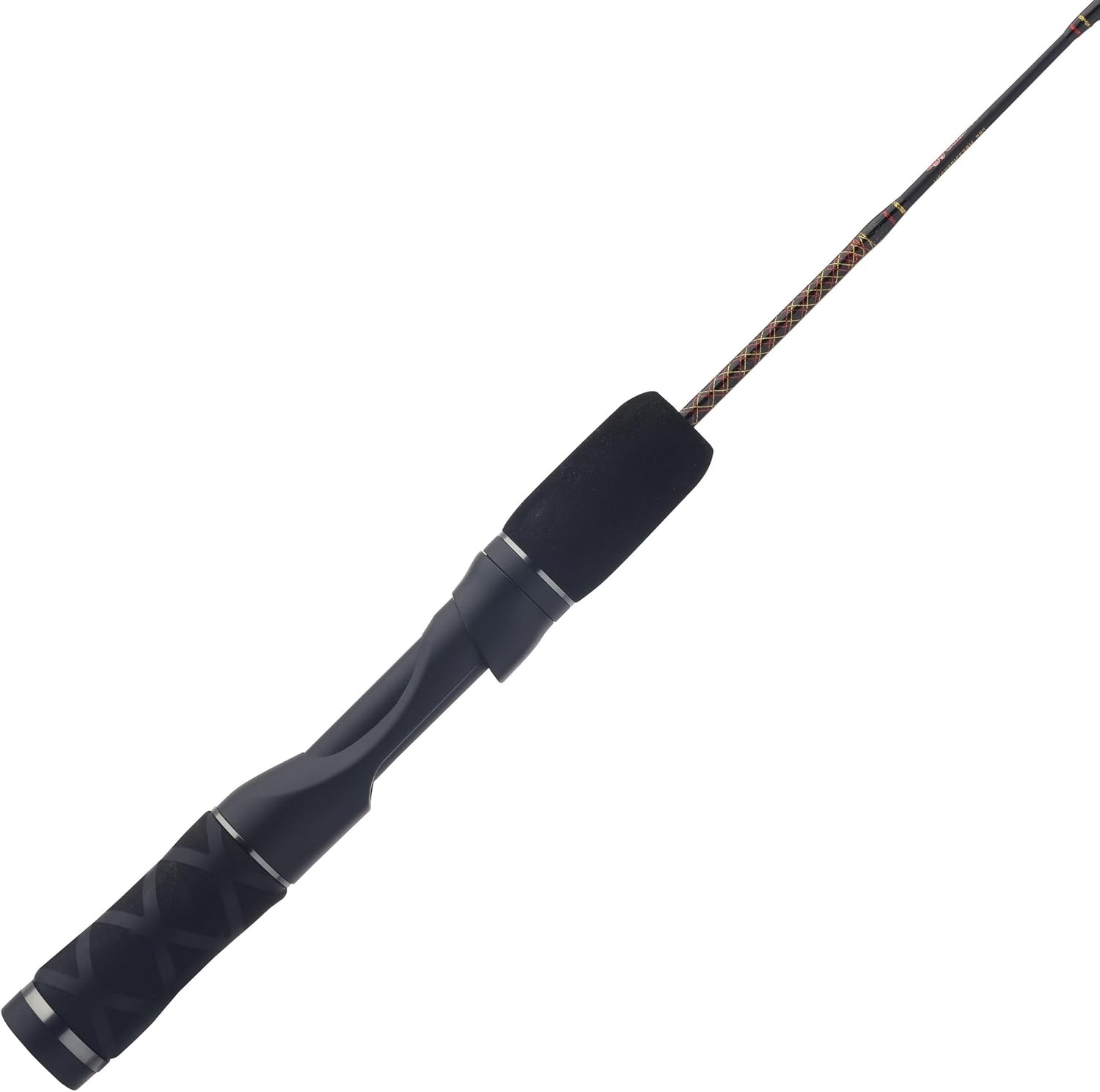
Ugly Stik 32" GX2 Ice Spinning Rod, 1-Piece Fishing Rod, Medium Rod Power, 4-8 lb Line Rating
Check current Amazon price
The spec line is short and specific: 32 inches, one piece, medium power, 4 to 8 pound line. On ice, that reads as a panfish and perch blank with enough backbone for a decent walleye, and the one-piece build means there is no ferrule to ice up at ten below. A frozen ferrule is not a small annoyance. It is the joint that lets go when you set the hook.
The 4 to 8 pound rating is the part people ignore. It means 4 pound mono or a 6 pound braid with a drag set light, and it means discipline. A 32-inch rod has very little shock absorption, so a drag set too tight has nowhere to send the load except into the line or the tip. Read that rating as a ceiling, not a suggestion.
The short length is also why you set the hook with a wrist snap rather than the overhead swing you use on open water. There is not enough blank behind you to load up a big hookset, and there is no need, because you are fishing straight down through a hole. Where the length hurts is casting. This is a jigging rod, not a rod for throwing a plug across a bay.
Flaws but not dealbreakers: It is 32 inches, so it is not versatile. If you want one rod for ice and soft water, this is not it, and no short ice blank will be. Keep it in a sleeve, keep the drag loose in storage, and rinse the guides after every trip.
The big-game pick: KastKing Rekon Saltwater Spinning Rods, Powerful for Big Game
The big-game pick
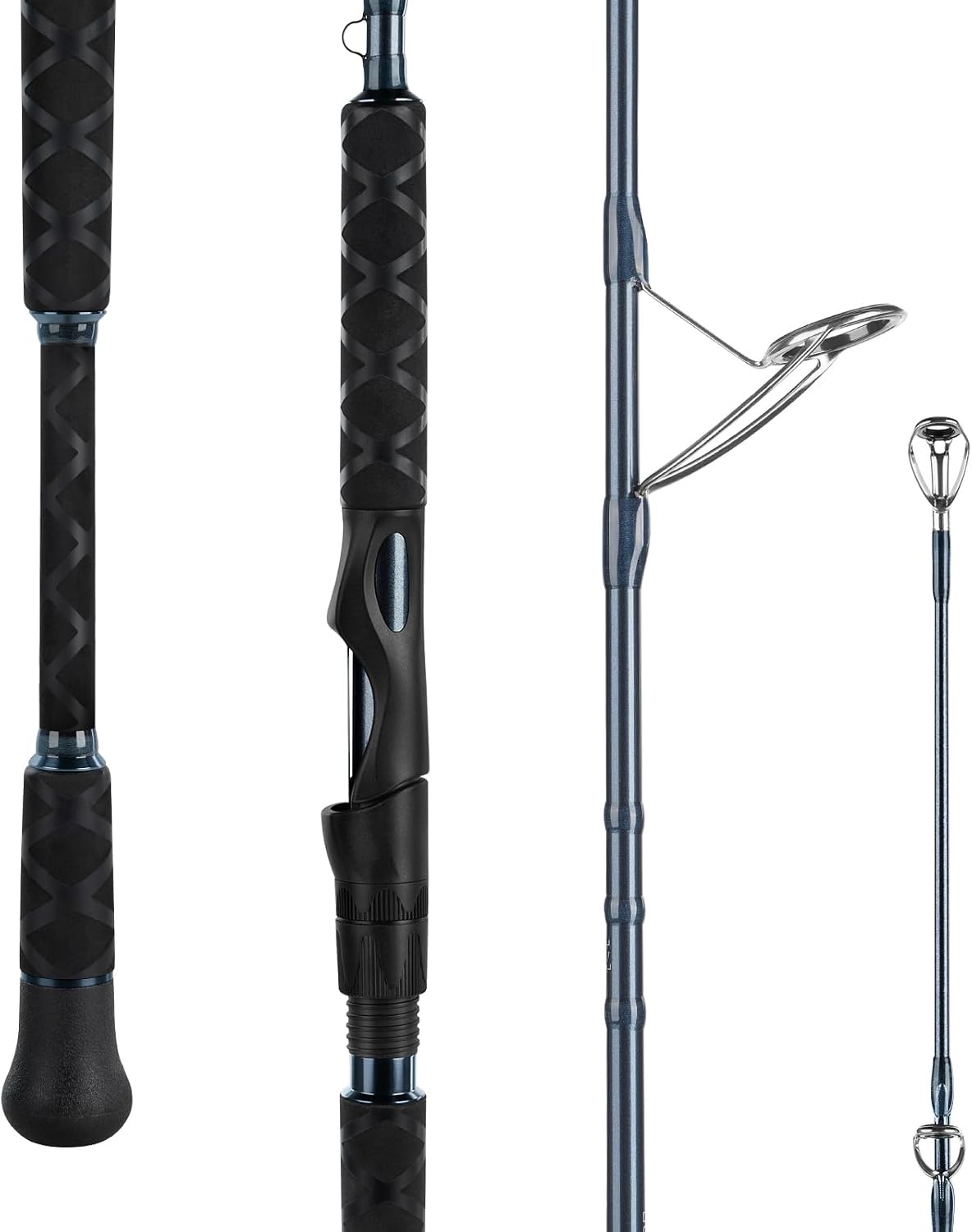
KastKing Rekon Saltwater Spinning Rods, Powerful for Big Game
Check current Amazon price
The listing is written for saltwater and for big game, which is the right place to start and the wrong place to stop. Saltwater spinning rods live or die on the details, and the details are why I would hand this to someone past the pier-and-bobber stage.
The first thing to read is the range of configurations. The listing covers a line of saltwater spinning rods rather than one single build, which is exactly where a rods size guide earns its keep. Match the rod to the braid class and to the drag your reel can actually produce, not to the biggest fish in the brochure.
Second, look at the guides. A saltwater rod that sits in a holder with a wet leader will corrode at the frame before the blank ever fails, and a cracked insert shaves braid on the first cast of the second season. Third, check the reel seat. Big game means long fights and heavy drag, and a seat that flexes is a seat that will loosen. Fourth, look at the butt section, because that is the part doing the lifting when you pump a fish up from deep water.
Flaws but not dealbreakers: A rod positioned for big game is more rod than a schoolie striper needs, and it will feel heavy if all you do is cast small plugs from a beach. That is a fit problem, not a defect. Buy it for the day the drag gets tested.
The actual workflow: how to use rods in eight steps
Now the part I actually say out loud at the counter. The steps apply to both rods. Only the numbers change.
Step one: Match the rod to the line before you spool. Read the rating on the blank and fish inside it. The ice rod says 4 to 8, so 4 pound mono or a 6 pound braid is the window. Ten pound braid on that blank turns a medium rod into a lever with no give. On the saltwater rod, pair the braid class to the drag your reel can deliver, and step up the leader by one or two sizes, no more.
Step two: Set the drag with the rod loaded. Tie off to something solid and bend the rod into its working curve. Tighten the drag until the rod sits in the middle third of its bend and the line slips before the blank flatlines. On ice, go lighter than feels right. On the salt, set it for the heaviest run you expect, then back off a quarter turn and let the fish earn the rest.
Step three: Rig inside the weight window. An ice jig heavy enough to dead-stick the tip is too heavy. Hang the lure you intend to fish and watch where the bend starts. If the bend runs past the middle of the blank at rest, you are overloading the tip, and a tip that stays loaded all day is a tip that breaks first. Saltwater gets the same test with heavier tackle: a 3 ounce plug on a rod rated for 1 ounce casts badly and fights worse.
Step four: Cast with the blank, not the shoulder. Load the rod by pulling the lure back until you feel the tip bend, then push forward smoothly from two o'clock to ten o'clock and let the rod unload. The common failure is a hard shoulder throw that collapses the tip and snaps the line. On ice you are not casting at all, so this step becomes a drop: lower the jig to the bottom, tighten up, and keep the line vertical.
Step five: Set the hook with a sweep. On a 32-inch ice rod, a short upward wrist snap is plenty, because there is no stretch and nowhere for the energy to hide. On the saltwater rod, a long sideways sweep that comes tight against the drag is what drives a heavy hook home. What you must not do is high-stick. A rod bent past 90 degrees near the tip is a rod about to break, and it breaks right where the bend ends.
Step six: Fight the fish with the butt section. Keep the rod at roughly 45 degrees, keep the bend below the upper third, and pump and reel: lift with the rod while you reel down, then lower and repeat. Let the rod stay between you and the fish instead of overhead. For the reel side of this, my spinning reel maintenance walkthrough covers drag washers and spool tension.
Step seven: Land without lifting. Swing small fish or use a net for anything with shoulders. Lifting a fish with the rod tip is the most common break I see at the repair counter, and it is always the same break, a couple of inches below the tip. On ice, slide the fish onto the ice instead of hoisting it out of the hole.
Step eight: Rinse, dry, and store it like you mean it. Saltwater gear gets a freshwater rinse, a wipe down, and a drop of oil on the reel seat threads. Ice gear gets a wipe, the drag backed off, and a corner to stand in where nobody steps on it. Run a cotton swab around each guide ring once a month; if the cotton catches, the insert is cracked and your braid will find it. Loosen the drag for storage, keep one-piece rods in a sleeve, and check the guides again after the first cold snap.
The competition and why it lost
A two-piece ice rod is the obvious alternative to the Ugly Stik, and it loses on the joint. Two-piece ice blanks pack better, but the ferrule is exactly where ice collects, and a frozen ferrule that gets twisted can loosen or crack. I have watched it happen on a sled ride in more than once. The one-piece 32-inch blank is the safer tool at ten below, full stop.
Heavy fast-action freshwater rods pressed into saltwater service are the other loser. They feel great in the store and they fish badly by September, because the guide frames are not built for salt and the blank has no forgiveness at the drag pressures big fish demand. This is the lesson the rods saltwater crowd learns the expensive way, which is why they repeat "rinse it" until they are blue in the face.
Big-box rod and reel combos lose for a different reason. The rod in those kits is usually fine, and the reel dies first, which means you paid for a rod you already had. If the budget is tight, buy one decent rod and one decent reel separately and skip the foam insert that came in the box.
The long surf rods, the ultralight panfish sticks, and the fly rods all belong to other articles. This one is about how to use rods you already own or are about to buy, not about collecting a rack. For the cold-weather half of that rack, see my ice fishing shelter setup notes before the season turns.
What this all costs
Both rods sit on the affordable side of the rack, and the ice blank is the cheaper of the two. Prices move, so use the link on each product above and check current Amazon price rather than trusting a number written into an article, including this one. What matters for the budget is not the sticker on the blank. It is what happens after.
The real cost of getting this wrong is a replacement. A broken tip from a high-sticked fish costs you a rod, a trip, and the drive to the nearest shop that has one in stock. A corroded guide insert costs you the braid it shreds before you notice. A drag left tight through the off-season costs you washers. Every one of those failures is free to prevent with a rinse, a loosened drag, and a cotton swab.
Line is the one consumable you should plan to replace. Ice line gets stiff and takes a set after a season in the cold, and saltwater braid collects grit. Re-spool before the season, not after the first fish you lose. Do that and the cost per trip drops to almost nothing, because the rod itself is the part that should outlive everything else on the sled or in the boat.
That is the job. Two rods, eight steps, and a rinse at the end of the day. The blank was built to do the rest. Let it.