

Most people searching for active base layers for layering are not shopping for a fashion layer. They are solving a physical problem: sweat on the climb, wind on the ridge, and a long stop at a trailhead where a damp shirt turns into a refrigerator. The layer against your skin decides whether the rest of the system works. Get it wrong and no shell rescues you. Get it right and you stop thinking about it, which is the point of good gear.
This guide covers six sets in two families: 100% merino wool and synthetic compression. It compares what the listings actually state, flags what they leave out, and matches each set to a use case. Nothing here is a lab test, and nobody stood in a freezer for you. Every judgment is drawn from the specifications and construction claims the products publish, plus how that kind of construction behaves in a real layering system: next to skin, under a midlayer, under a shell. If you want the short version of the best active base layers for layering, the quick answer sits a few lines down.
Quick answer
The Merino.tech 100% Merino Wool Base Layer Men Set is the strongest fit for three-season layering under a shell because it pairs a 100% merino top and bottom in a single set, keeping the entire next-to-skin layer on one fabric and one wash routine. Choose the 100% Merino Wool Base Layer Women 250gsm Midweight Thermal Set instead when you want a women's cut with a stated fabric weight for colder days.
Active base layers for layering worth comparing
Two things drive everything else in this category: what the fabric is and how the set is put together. Wool and synthetic handle moisture differently, and a set that ships with a beanie or an extra pair of pants changes how many pieces you own before your first trip. The six sets below are the ones worth putting side by side, with the top pick first.
Top pick
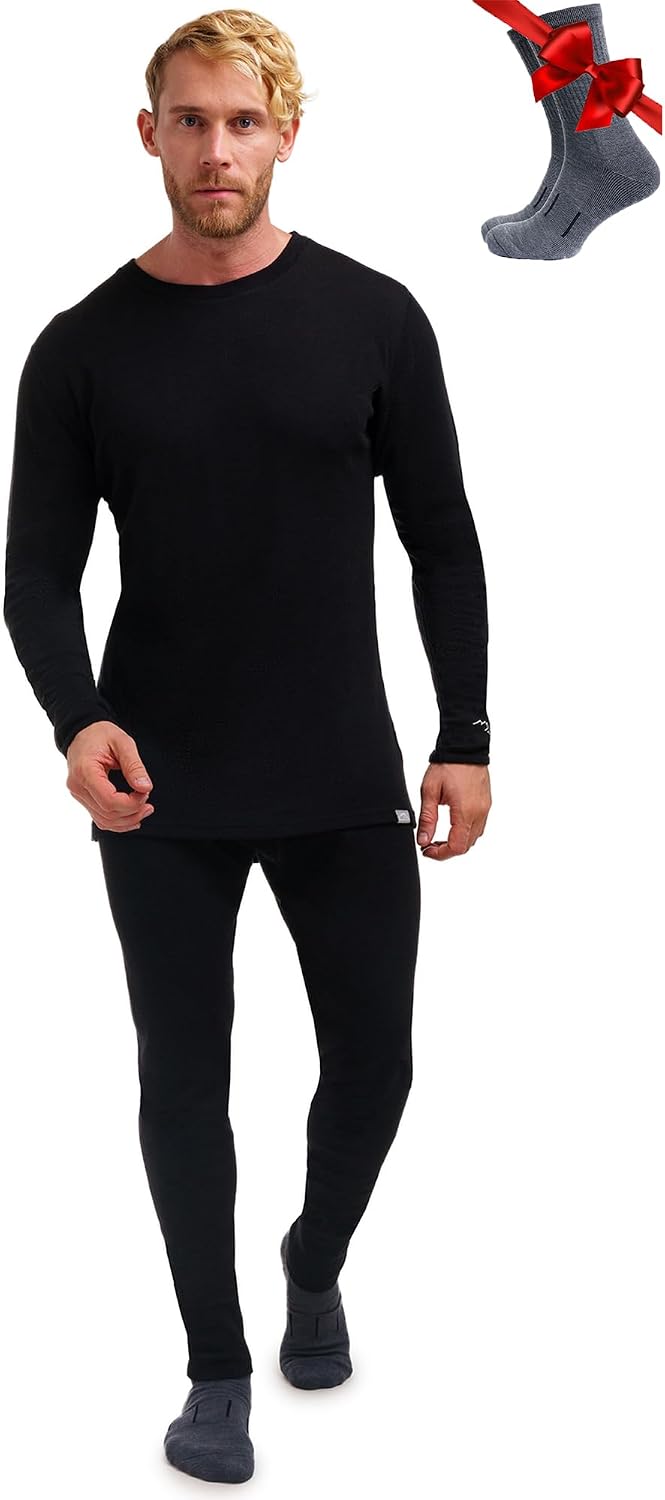
Merino.tech 100% Merino Wool Base Layer Men Set – Thermal Underwear for Men
A matched 100% merino top and bottom in one set, so the whole next-to-skin layer shares the same fabric and the same wash routine.
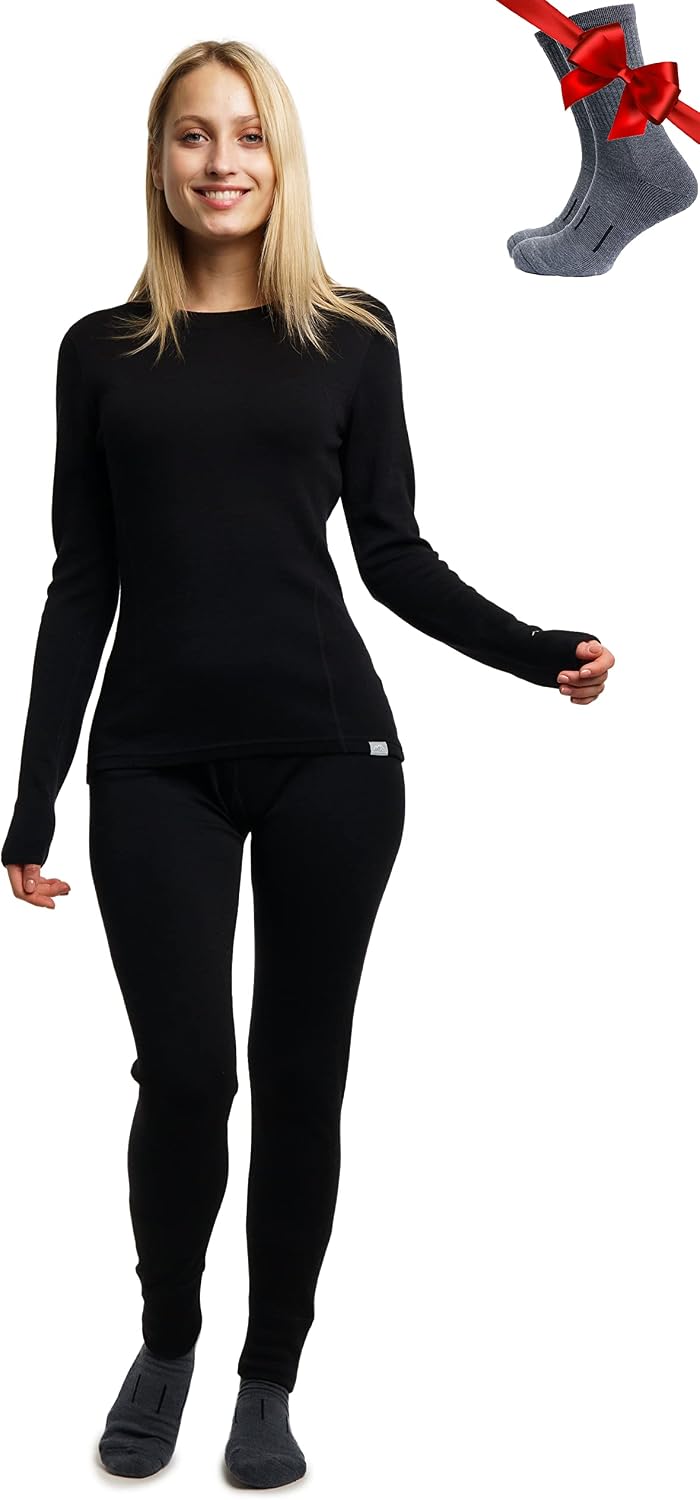
Merino.tech 100% Merino Wool Base Layer Women Set – Thermal Underwear Women
The same 100% merino set idea cut to a women's pattern, with top and bottom sold together as one thermal layer.
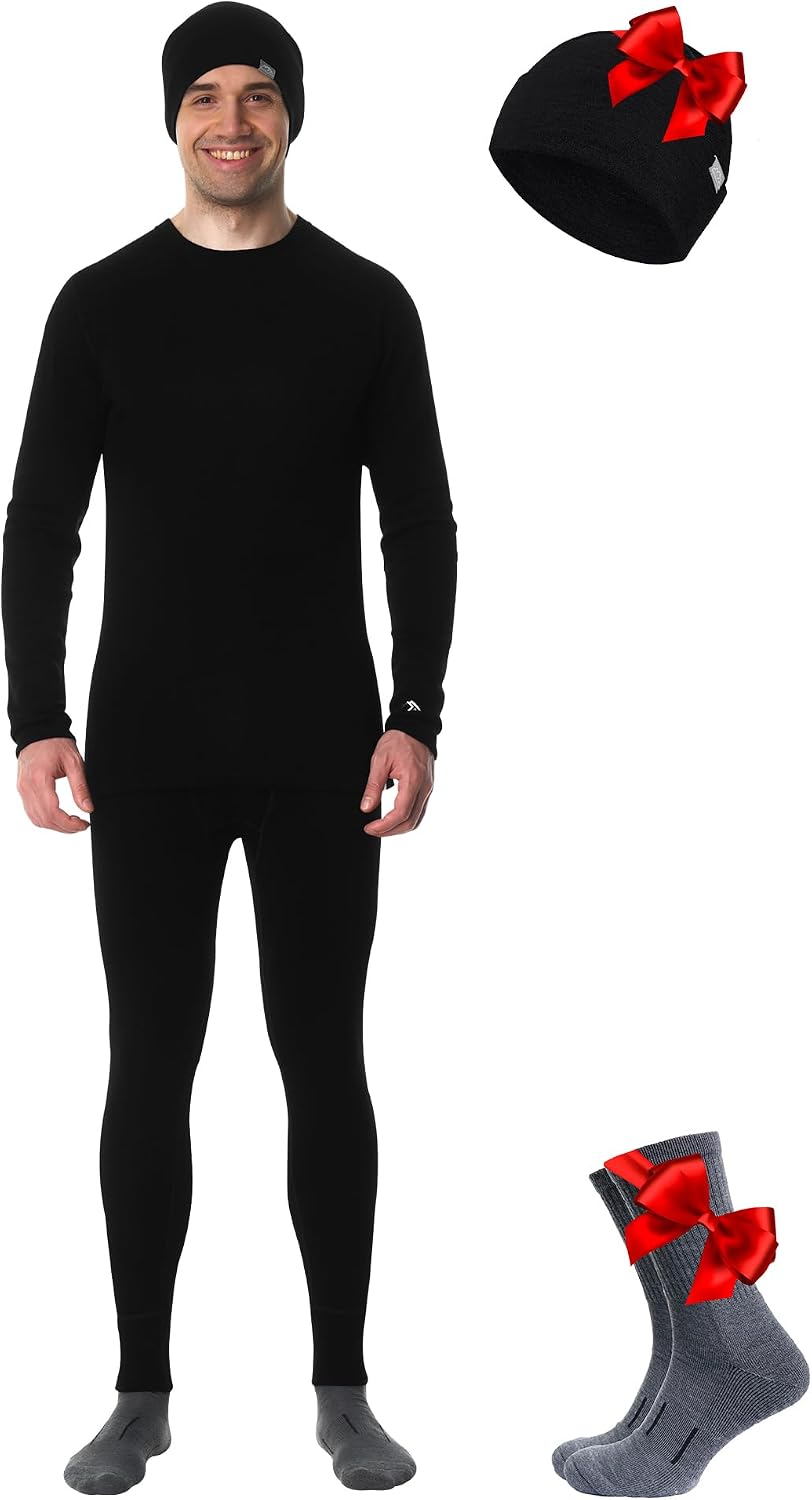
Merino.tech 100% Merino Wool Base Layer Mens – Thermal Top, Bottom, Beanie
Adds a merino beanie to the top and bottom, which covers the head from the same fabric without a second order.
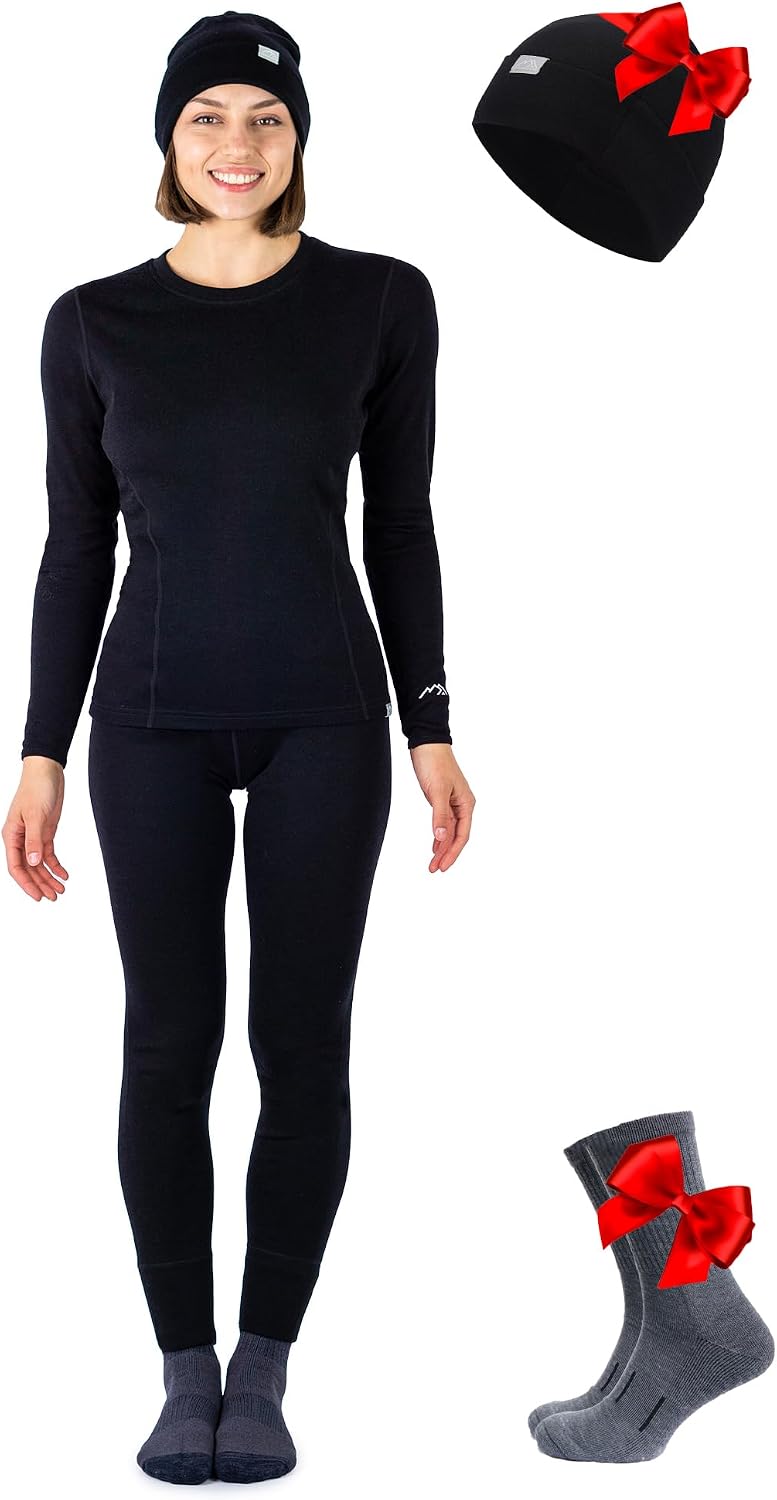
Merino.tech 100% Merino Wool Base Layer Women – Thermal Set Top, Bottom
A women's 100% merino set built around a top and bottom, positioned as a straightforward two-piece thermal layer.
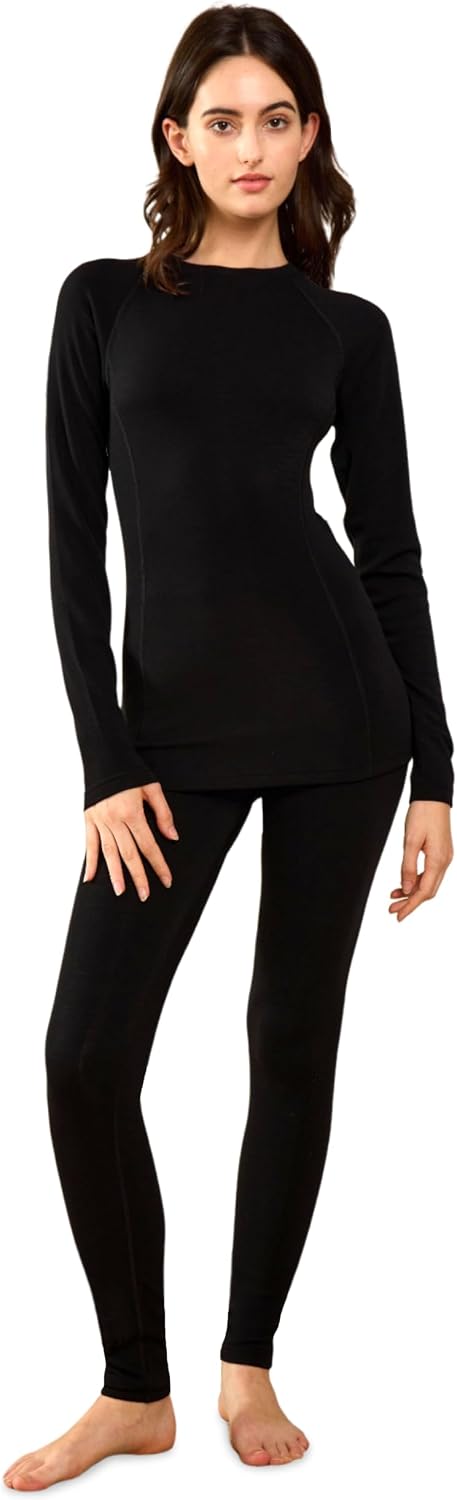
100% Merino Wool Base Layer Women 250gsm Midweight Thermal Set
The one set here that states a fabric weight: 250gsm midweight merino, which puts it in the colder-conditions band.
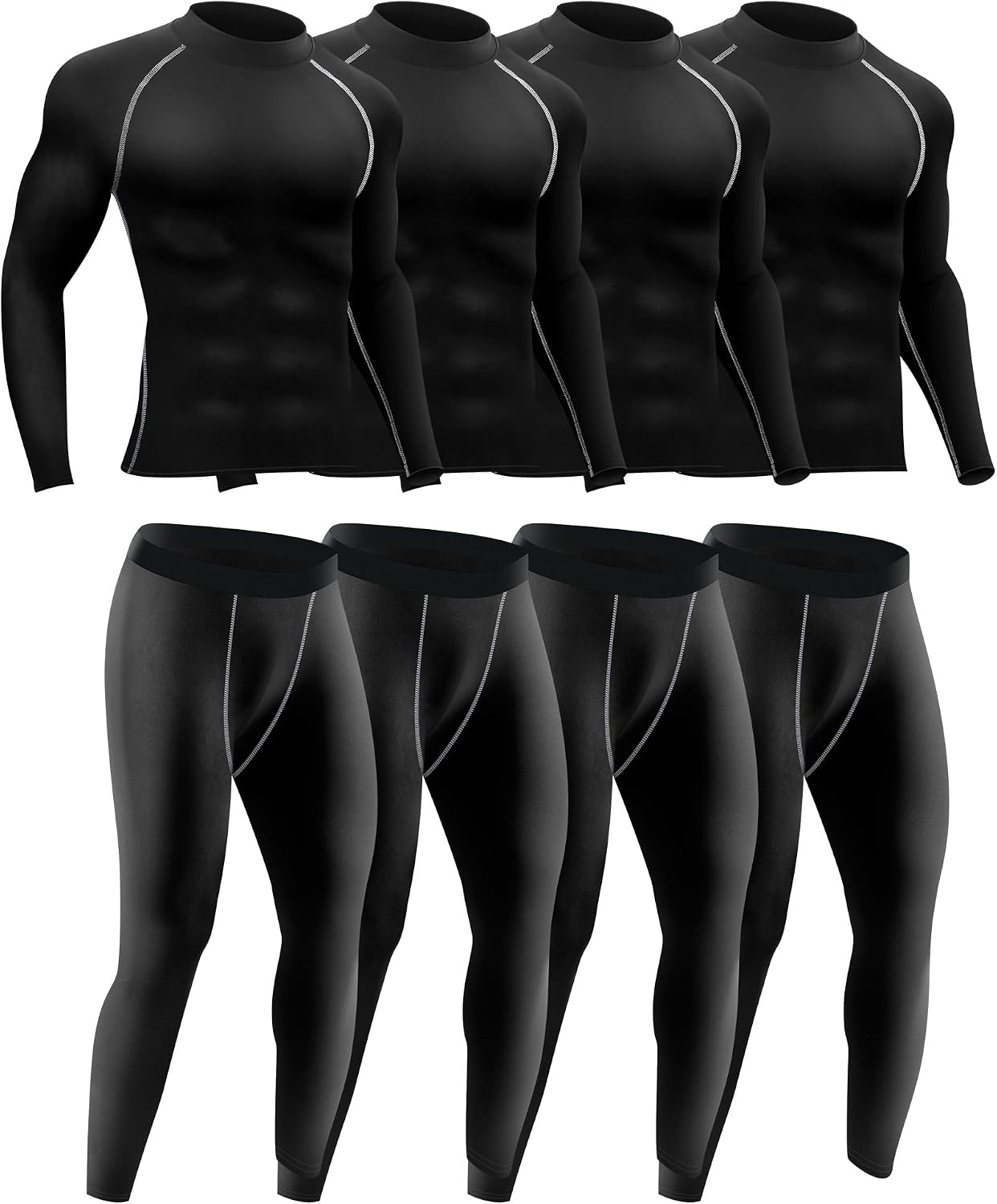
Hicarer 4/6 Set Men's Compression Shirts Pants Long Sleeve Base Layer Set Thermal Underwear for Men Running Gym Yoga Sports
A multi-pack synthetic compression set aimed at running, gym work, and yoga, where a tight fit matters more than wool's temperature range.
How these products were compared
This guide compares fiber content, set composition, stated fabric weight, cut and sizing, and care requirements. Product names, images, and retailer links are matched by ASIN so that every card points to the product shown.
Fiber content comes first because it decides how the layer behaves when you sweat. Five of the sets here are described as 100% merino wool, which is the version worth owning for multi-day use; blends are not part of this comparison. The Hicarer set is a synthetic compression product, which puts it in a different job category rather than a lower one.
Set composition is the second filter. A set with a top and bottom covers the base layer in one order. A set that adds a beanie covers the head as well. Multi-pack synthetic sets cover laundry rotation, which is the real constraint on a gym or running schedule where you might use the layer five times a week.
Stated fabric weight is the third. Only one product here publishes a number in its name, and that number is the most useful single data point in the roundup.
Cut and sizing come fourth, and they are the reason to read an active base layers size guide rather than guessing from a cotton tee size. Wool base layers are usually worn close but not compressive, and a set that is too loose at the waist loses most of its value under a pack.
Care requirements are last. Merino and synthetic both survive fine when washed correctly and both degrade fast when washed wrong.
I read a lot of active base layers reviews while assembling this, and the pattern holds: complaints cluster around sizing and shrinkage, not around the fabric failing. There is also no shortage of top rated active base layers on paper, which is exactly why the ratings are only as good as the sizing data behind them. That is where your attention belongs too.
How to choose the right active base layer
How to choose active base layers comes down to fiber, weight, fit, and the season you actually use them. Start with the temperature band and the effort level, not the brand. A base layer does one job: move moisture off your skin and hold a thin insulating layer of still air. Merino does both steadily and keeps working when damp, which is why it dominates multi-day trips where you cannot wash a shirt every night. Synthetic moves moisture faster and dries quicker but holds odor, which matters less for a two-hour run and a lot for a three-day traverse.
Weight is the next decision. A lightweight merino layer is the right first purchase for most people, because it layers under a fleece in January and works alone on a cool June climb. A midweight layer such as a 250gsm set belongs in the colder half of your season, or under a shell on a wet, windy day. The mistake is buying the heaviest thing available and then overheating on the approach, a common failure when someone follows an active base layers buying guide that leads with warmth instead of range.
Fit is where most returns happen. Measure your chest and waist, check the maker's own chart rather than the size you wear in a cotton tee, and accept that merino will relax slightly with wear and recover after washing. If you are between sizes and plan to wear the layer under a midlayer, size to the smaller one for a close fit; if you plan to wear it alone, size up. This is the point of an active base layers size guide from the manufacturer: those numbers are cut from that chart.
Seams and cuffs are worth a look before you commit. Flatlock seams sit flatter under a pack strap. A longer body hem stays tucked when you reach overhead. Thumb loops are a matter of taste, but if you ride or climb in cold wind, they keep the sleeve from riding up under a shell cuff.
One piece of vocabulary is worth clearing up. People search for waterproof active base layers, but a base layer should never be waterproof: it has to pass moisture outward, and a waterproof membrane next to the skin traps sweat. Waterproofing belongs on the shell. If you are hunting for a waterproof base layer, what you actually need is a breathable next-to-skin layer plus a shell with taped seams.
Finally, be honest about how many pieces you will use. Two tops and one bottom cover a weekend. One top and one bottom per person is fine for day trips. Active base layers for beginners can be one lightweight merino set and nothing else until you know how you run hot and cold. The best active base layers for layering are the ones that match your season and your fit, not the ones with the longest feature list.
Merino.tech 100% Merino Wool Base Layer Men Set
The top pick is the men's 100% merino set because it solves the whole next-to-skin layer in one purchase from a single fabric. The listing describes a merino top and bottom, which is the right starting point: same fiber, same care, same expected behavior on a multi-day trip. Merino's practical advantage is that it keeps some insulating value when damp and resists odor across several days of use, which is exactly what you want from the layer you cannot easily wash on a backcountry night.
What the listing does not spell out is fabric weight, and that is the one gap worth knowing about. Without a stated gram weight, treat this as a general-purpose three-season set rather than a winter-specific one. If you run cold, plan to pair it with a midlayer you already own rather than expecting it to be the warm layer. If you run hot on the climb, this is the profile you want, because merino regulates better than a tight synthetic when your effort level swings.
Sizing is the other place to be careful. Merino base layers are cut close, and the men's set has to fit at both the shoulder and the waist to do its job. Check the maker's chart, measure rather than guess, and remember that a loose base layer bunches under a pack strap and creates cold spots at the small of your back.
The trade-off in one line: you get a complete, single-fabric merino set without a published weight number, so you accept general-purpose performance rather than a precisely specified one.
Alternatives to consider
The Merino.tech 100% Merino Wool Base Layer Women Set is better suited to the same three-season role in a women's cut, with a matched top and bottom, while the Merino.tech 100% Merino Wool Base Layer Mens – Thermal Top, Bottom, Beanie is a stronger fit when you want the head covered from the same fabric and would rather not pack a separate hat.
The Merino.tech 100% Merino Wool Base Layer Women – Thermal Set Top, Bottom, the 100% Merino Wool Base Layer Women 250gsm Midweight Thermal Set, and the Hicarer 4/6 Set Men's Compression Shirts Pants Long Sleeve Base Layer Set cover the remaining cases: a second women's merino option to compare fit against, the only set here with a stated 250gsm midweight fabric for cold days and winter layering, and a synthetic compression multi-pack for running, gym work, and yoga where a tight fit and quick laundry turnaround matter more than wool's odor resistance.
There is a real argument for the 250gsm set beyond the number itself. A stated weight is a stated promise. When a listing publishes its gram weight, you can compare it to the midlayer and shell you already own instead of guessing from adjectives. That is the sort of detail that separates a specification from marketing copy.
The Hicarer set plays a different game. Compression synthetics are designed to sit tight, dry fast, and survive frequent washing, and a multi-pack means you always have a dry set waiting. What you give up is merino's ability to keep working across multiple days without odor becoming the limiting factor, plus the wider comfortable temperature range.
Day-to-day use and maintenance
Merino lasts when you wash it less and wash it properly. Air it out between uses, wash on a cool wool cycle with a wool-specific detergent, skip fabric softener entirely, and dry it flat or on low. Hot water and a hot dryer are what shrink a wool base layer and turn a close fit into a tight one. Synthetics are more forgiving in the wash but hold odor, so a sport detergent and air drying help; high dryer heat also degrades the stretch in compression fabric over time.
Layering practice matters as much as laundry. Treat active base layers layering as a system with three jobs: the base moves moisture, the midlayer traps warmth, and the shell blocks wind and water. If you overheat on the climb, vent the midlayer and shell before you strip the base layer, because a sweaty base layer is the hardest thing to recover from at a cold stop.
Two practical notes. First, rotate two tops if you use a base layer more than twice a week, since fibers wear from washing more than from wearing. Second, inspect the shoulder seams and the crotch seam before a trip; those are the failure points on any base layer, and a small repair at home beats a split seam on day two.
Store base layers clean and dry, folded rather than hung if the fabric is heavy, and keep them away from anything that can snag wool. A sealed bin and a clean layer are enough; no moth treatments needed.
Buying checklist
- Measure chest, waist, and inseam, then compare to the maker's own chart rather than your cotton tee size.
- Choose a fabric weight based on the season you actually use rather than the coldest trip you can imagine.
- Confirm that the exact set includes both a top and a bottom, and whether a beanie or a spare piece is part of the package.
- Read the cleaning and care instructions before the first wash, especially for 100% merino.
- Verify the current retailer price, availability, and return terms before you order.
Final recommendation
Choose the Merino.tech 100% Merino Wool Base Layer Men Set when you want one complete 100% merino layer for three-season hiking, camping, and everyday cold-weather use. Choose the 100% Merino Wool Base Layer Women 250gsm Midweight Thermal Set when a stated midweight fabric and a women's cut matter more than general-purpose flexibility.
If your use is indoor training, running, or gym work, the Hicarer 4/6 Set Men's Compression Shirts Pants Long Sleeve Base Layer Set is the better match, and the beanie-included men's set is worth a look if your head gets cold before your hands do. There is no single winner for every body and every trip, which is why what counts as top rated active base layers depends entirely on the use case. Pick the fabric and weight that match your season, confirm the fit against the maker's chart, and then stop thinking about it.